
The route at a glance
Fly into London, fly home from London (or Bristol) after Bath. In between: London (2 nights) → Oxford (1 night) → the Cotswolds (1 night) → Stratford-upon-Avon (1 night) → Bath (1 night). This 7 day England itinerary is a single arc west and then south, with Windsor on the way to Oxford and Stonehenge on the way to Bath. It is built for first-time visitors who want the main sights without long transfers: apart from the Stonehenge day, no leg is longer than about two hours. It leaves out the north (York, the Lake District) and the south-west coast, which need more days.
Day-by-day overview
| Day | Base | What you do |
|---|---|---|
| 1 | London | Arrive at Heathrow (about 45 minutes to the centre), Westminster and the South Bank |
| 2 | London | Tower of London, St Paul's Cathedral, the City, a museum in the afternoon |
| 3 | Oxford | Windsor Castle (about 1 hour from London), then Oxford (about 1 hour), colleges and the Bodleian Library |
| 4 | Cotswolds | Burford, Bibury and Bourton-on-the-Water, a country walk, evening in a stone village inn |
| 5 | Stratford-upon-Avon | Shakespeare's Birthplace, Anne Hathaway's Cottage, Warwick Castle |
| 6 | Bath | Drive to Stonehenge (about 2 hours 15 minutes), then Bath (about 1 hour): Roman Baths, Royal Crescent, Pulteney Bridge |
| 7 | Bath | Thermae Bath Spa or the market, then the transfer to Heathrow, Bristol or the Bath train |
London: two nights
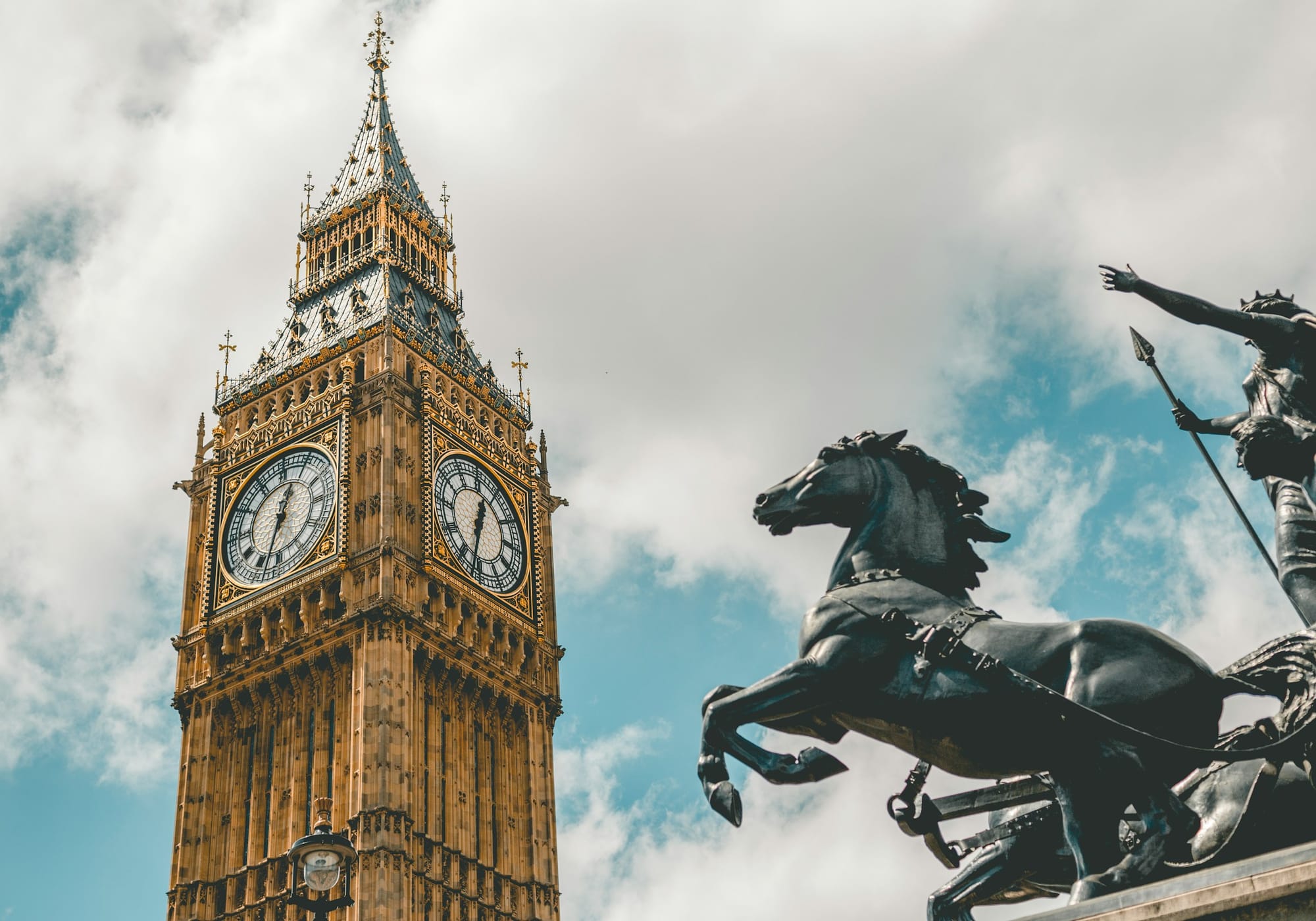
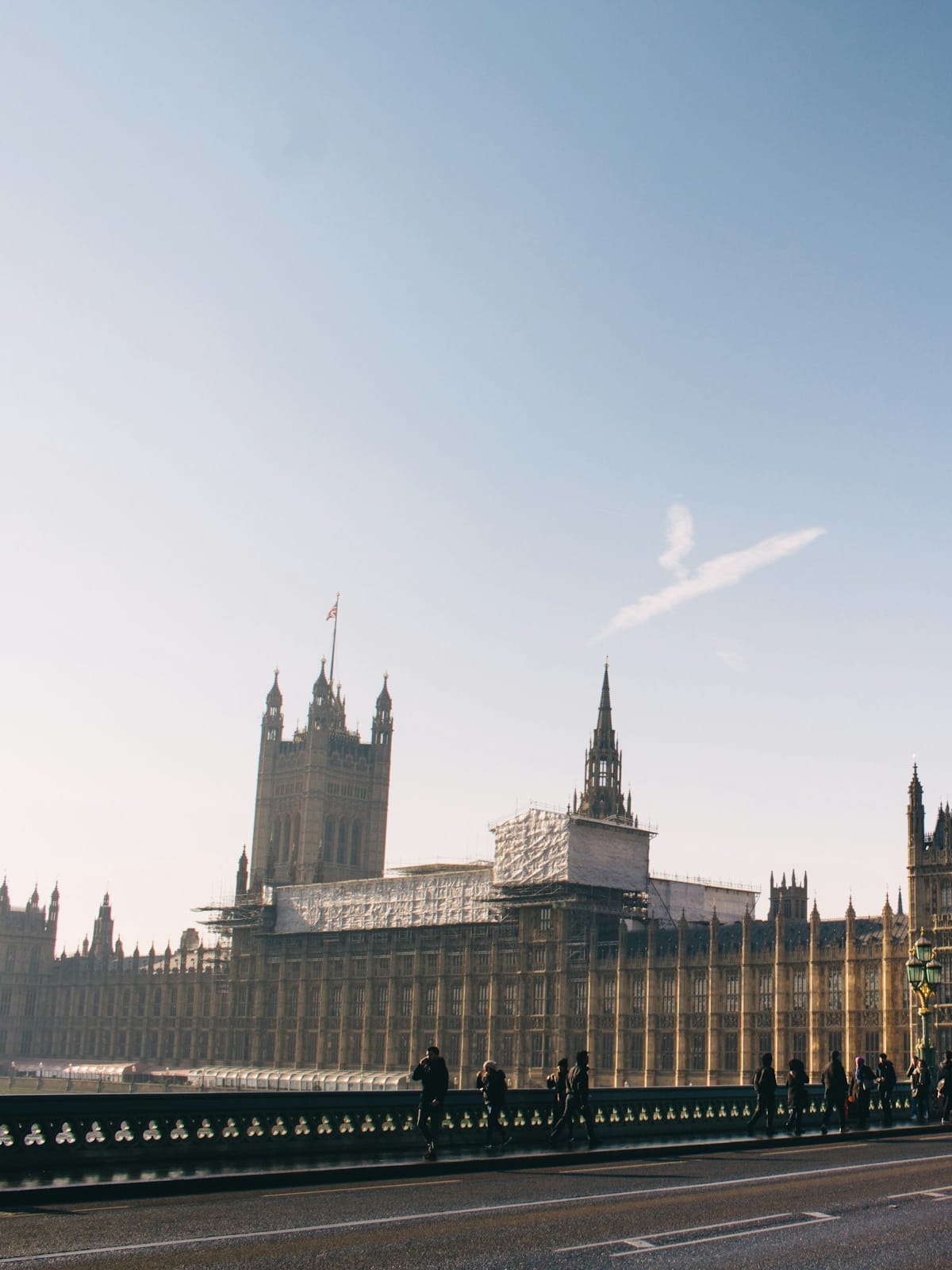
London has been a city since the Romans founded Londinium in AD 43. Day one is for Westminster, where Parliament, Big Ben and the Abbey stand close together on the north bank, and a walk along the South Bank to Borough Market. Day two is the City: the Tower of London, begun by William the Conqueror after 1066 and home to the Crown Jewels, and St Paul's Cathedral, with Wren's dome from 1710.
Add one museum for the afternoon, such as the V&A or the British Museum, both free. Book Tower of London entry in advance and go at opening time. Two nights is the minimum for London. If you want a West End show or Greenwich, add a third.
Windsor and Oxford: one night
Windsor Castle, about 40 km west of London, has been a royal residence since William the Conqueror built a wooden fort here around 1070. Visit the State Apartments and St George's Chapel, where ten monarchs are buried. The castle is a working royal residence and some rooms close at short notice, so check the dates before booking.
From Windsor it is about an hour to Oxford. The university has more than 30 colleges, and visitors can enter a few of them, such as Christ Church, Magdalen and Merton. The Bodleian Library, one of the oldest libraries in Europe, and the Radcliffe Camera are the other fixed points. Stay in the city centre so you can walk the colleges at the end of the day, after the tour groups leave.
The Cotswolds: one night
The Cotswolds are a limestone ridge running from Chipping Campden in the north to Bath in the south. The villages are built of local honey-coloured stone, with large wool churches paid for by the medieval wool trade and dry-stone walls between the fields. From Oxford it is about 30 minutes to Burford, where the high street slopes to the river. Then Bibury, with its row of weavers' cottages, Arlington Row, and Bourton-on-the-Water, where low stone bridges cross the River Windrush.
Do not rush. Pick three villages and add a walk of an hour or two between them on a footpath. The villages are busy at midday in summer and nearly empty by early evening, which is a good reason to stay overnight in one of the converted inns or country houses.
Stratford-upon-Avon: one night
Stratford is about an hour from the Cotswold villages. William Shakespeare was born here in 1564 and retired here. The Shakespeare Birthplace Trust looks after five properties, including the Birthplace on Henley Street and Anne Hathaway's Cottage in the village of Shottery. The Royal Shakespeare Company theatre stands on the river, and if there is a performance, it is worth booking early.
In the afternoon, Warwick Castle is 15 minutes away, a medieval fortress on the River Avon with a large visitor programme. Choose it if you like castles; skip it if you prefer a longer lunch in Stratford.
Stonehenge and Bath: one night
Day six is the longest of the week. Stratford to Stonehenge is about 2 hours 15 minutes by road, and Stonehenge to Bath is about an hour. Leave early. Stonehenge uses timed tickets and sells out in summer, so book ahead. The stones were set up about 4,500 years ago, and the visitor centre explains how.
Bath is built over the only natural hot springs in Britain. The Romans developed them into a bathing complex between AD 43 and 410, and the Roman Baths museum is one of the best-preserved Roman sites in the country. The Georgian city above it, with the Royal Crescent and the Circus, dates from the 1700s. On the last morning, the Thermae Bath Spa has a rooftop pool filled by the same hot spring, and the Jane Austen Centre is on Gay Street.
Where to stay
London: the West End or South Kensington, close to Tube lines and walkable to many sights. Oxford: the city centre. The Cotswolds: a village inn or country-house hotel in Burford, Bourton or Chipping Campden. Stratford: the town centre, near the theatre, or a manor house a few miles out. Bath: the centre, within walking distance of the Abbey and Baths. The Cotswolds and Bath are the places to spend a little more, because the setting is the point.
When to go
May, June and September are the best months: gardens in flower, long days and manageable crowds. July and August are busiest, especially in Bath, Stratford and the Cotswold villages. April and October can be good, with a higher chance of rain and shorter days. In winter, London is lively and Bath has a Christmas market, but the Cotswolds are quiet and some country attractions close. Bring a rain jacket in any season.
Ways to change the route
With 8 days, swap Stratford for York and the Lake District, as in our 8-day North, Lakes and York tour, which takes a different route north. With 9 or 10 days, add Cornwall or the Jurassic Coast after Bath. If you have visited London before, cut a London night and add a second Cotswolds night. With only 5 days, drop Stratford and go London, Oxford, the Cotswolds and Bath. Prefer trains to a driver? London to Oxford, Bath and Stratford are all rail routes, but the Cotswold villages and Stonehenge are hard to reach without a car.
How we plan it
We arrange the private driver, the hotels, timed tickets for the Tower, Windsor and Stonehenge, and a guide in London and Oxford. Because attractions can close at short notice, we confirm opening days before we fix the order. One person on our team is your contact from first email to flight home.
Frequently asked questions
Is 7 days enough for England?
Seven days is enough for London and a loop through Oxford, the Cotswolds, Stratford and Bath. It is not enough to add York, the Lake District or Cornwall without cutting a stop.
Do I need to hire a car?
Not with a driver. Trains are good between London, Oxford, Stratford and Bath, but the Cotswold villages and Stonehenge are much easier by road.
How far is Stonehenge from Bath?
About 55 km, or roughly an hour by road. Stonehenge needs a timed ticket, which should be booked ahead in summer.
Can I do the Cotswolds as a day trip from London?
Yes, but it is about 2 hours each way. Staying a night in the Cotswolds gives you the early and late hours, when the villages are quiet.
What is the best month for a 7 day England itinerary?
May, June or September. The weather is mild, the days are long, and the crowds are smaller than in July and August.
 Quick cookie chat