The short answer
Ireland is accessible, rewarding, and smaller than it seems — a country you can cross in a day's drive and that repays slowness and curiosity. Dublin is the arrival point and the logical start: a Georgian city of considerable literary and architectural distinction, built in the 18th century by an Anglo-Irish aristocracy that left it the finest collection of brick townhouses outside London.
From Dublin, drive south and west through the country over seven to ten days: the Wicklow Mountains (Glendalough's 6th-century monastic city), the medieval city of Kilkenny, Cork and the English Market, the Ring of Kerry (the most celebrated coastal drive in Ireland), the Cliffs of Moher (214 metres above the Atlantic for eight kilometres), and Galway (where the west coast's character is most concentrated). You'll need a private vehicle with a driver throughout — the roads are manageable, the sights are spread, and the freedom to stop at small villages and views is the point.
Dublin: Georgian brick and literary history
Dublin is built on the River Liffey and announces itself in Georgian brick: the wide streets of Merrion Square and Fitzwilliam Square, the Custom House, the Four Courts, and the painted doorways — each a different colour — that have been Dublin's domestic symbol since the 18th century. This is the city of Wilde, Beckett, Heaney, and Doyle — where literary history walks the streets and sits in the pubs.
Trinity College's cobbled square and Long Room library hold the Book of Kells — the 9th-century illuminated Gospel so celebrated that the Irish tourism board sometimes seems to think it's Ireland's only cultural product. It's extraordinary, but don't skip the rest of Dublin. The National Gallery has one of Europe's finest Irish art collections. The Guinness Storehouse at St James's Gate Brewery is kitsch but worth the pint at the top. The Temple Bar area is heaving with tourists; the real pubs — Kehoe's, the International Bar, the Brazen Head (Dublin's oldest bar, 1688) — are everywhere else and worth finding.
Dublin's Georgian core is the real sight: walk Merrion Square and notice the doors, the fanlights above them, the proportions of the windows. This is how Dublin looked when it was the second-largest city in the British Empire. The city's character is in these streets and in the evening life around Grafton Street and South Great George Street, where the buskers and the smell of fish and chips and stout emerge as darkness falls.
The south and east: Wicklow, Kilkenny, and Cork
The Wicklow Mountains begin twenty kilometres south of Dublin. Glendalough — the valley of two lakes — was founded as a monastic settlement by St Kevin in the 6th century and grew to a monastic city of several thousand before its destruction in 1398. The round tower and cathedral survive intact; the stone churches and monks' cells along the Upper Lake shore are some of Ireland's finest early Christian architecture. A walk up the valley gives you the specific quality of Irish monastic landscape: mountains, water, silence, and the stone structures built by people who chose remoteness as their spiritual practice.
Kilkenny, an hour south, is a Norman medieval city on the River Nore whose castle (built 1195) has been continuously occupied and whose narrow lanes (slipps) preserve a medieval street plan. The Dominican Black Abbey, St Canice's Cathedral, and the city's architectural unity make it one of Ireland's most complete medieval towns.
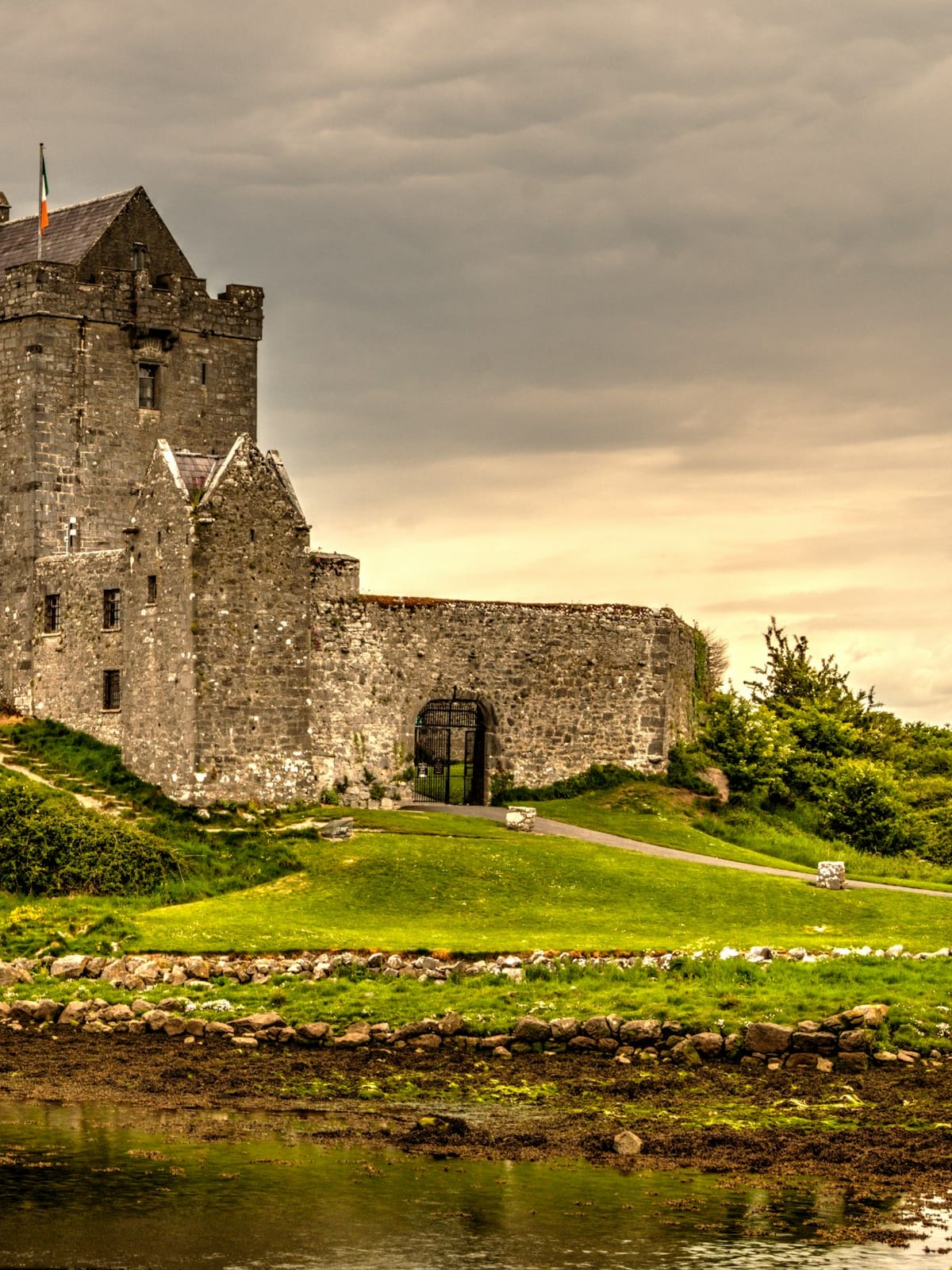
Cork, another hour south, is built on islands in the River Lee and has a character — self-aware, argumentative, proud of its food culture — that distinguishes it from Dublin. The English Market, established in 1788, is a covered food market whose traders have been selling Cork specialities for two hundred years: tripe, drisheen (blood sausage), crubeens (pig's feet), and the local butter that Irish dairy makes differently. The Crawford Art Gallery has the finest group of Irish art outside Dublin. Blarney Castle, thirty minutes from Cork, is a substantial 15th-century tower in mature woodland — the Blarney Stone legend is less than the mythology but more than cynicism.
The Ring of Kerry: 179 kilometres of the Atlantic coast
The Ring of Kerry is the coastal circuit of the Iveragh Peninsula — the largest of Kerry's five peninsulas and the one that made the county's reputation. The drive anticlockwise from Killarney takes a full day and covers Atlantic headlands, mountain lakes, the Gap of Dunloe (a glacial pass through the MacGillycuddy's Reeks, Ireland's highest mountains), and the town of Kenmare on the opposite shore.
Ladies View is the panorama above the Killarney Lakes that gave the Victorian tourists who named it a reason to return — the most photographed view in Kerry. The Skellig Ring, the southern loop of the circuit, adds Ballinskelligs Bay and the view of Skellig Michael — the sea rock seven miles offshore where Augustinian monks built a monastery in stone beehive cells between the 7th and 12th centuries. Accessible by boat in summer, the site has become recognisable from Star Wars but remains one of Ireland's most atmospheric places.
Kenmare, where the drive ends, is a small Victorian town that was planned by an Anglo-Irish landlord and has some of Ireland's best restaurants outside Dublin. The town sits at the end of the Beara Peninsula — itself wilder and less visited than the Ring, with dramatic mountain views and smaller villages.
The west: Dingle, the Burren, and the Cliffs
The Dingle Peninsula is narrower and wilder than the Ring of Kerry and receives fewer visitors. Slea Head at the western tip is one of the westernmost points of Europe — the Blasket Islands visible offshore, the last inhabited land before the Atlantic reaches Newfoundland. The Blasket Centre at Dunquin explains the community of Irish-speaking islanders who lived on Great Blasket until the last evacuation in 1953 and produced three writers — Tomás Ó Criomhthain, Peig Sayers, and Muiris Ó Súilleabháin — whose memoirs are among the most important documents of oral Gaelic culture.
Beehive cells (clochán) in the hillside above Fahan are dry-stone corbelled huts built by early Christian hermits, some dating to the 8th and 9th centuries, still standing without mortar. The sight of them — the spare stone construction, the remoteness, the permanence — tells you something about Irish monastic culture that no guide can explain.
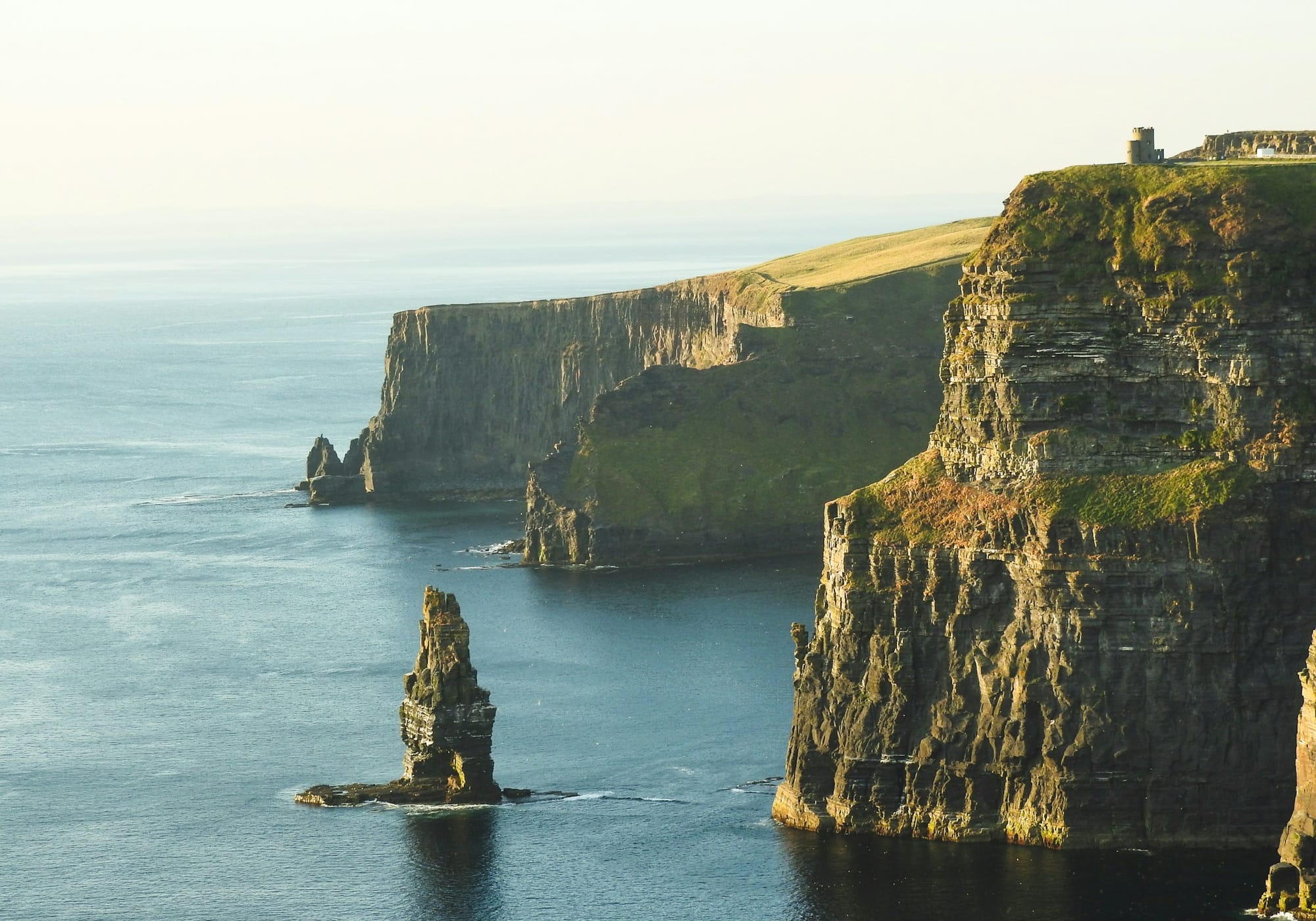
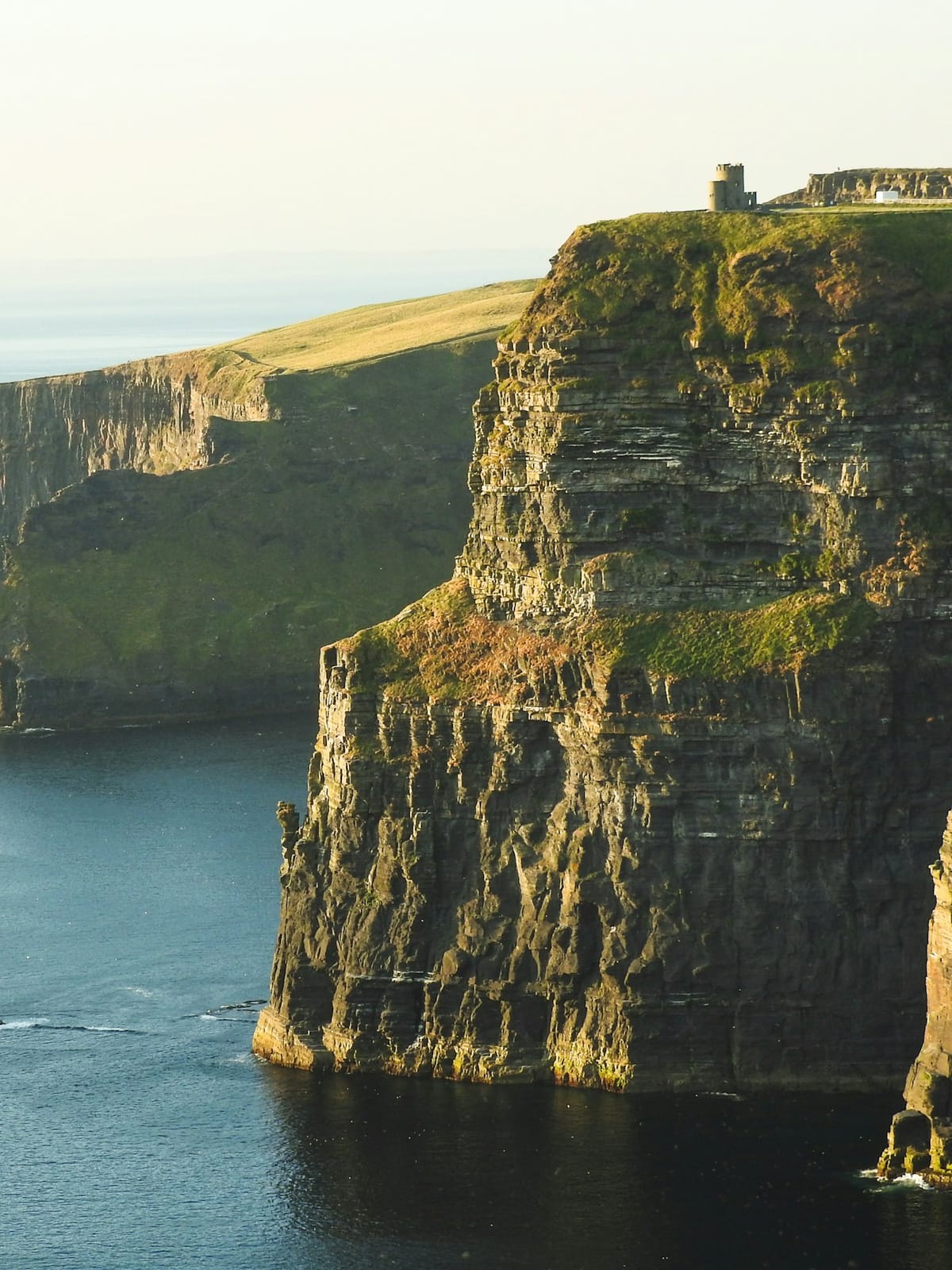
The Burren, north through Tralee and County Clare, is a limestone plateau whose 250 square kilometres of karst landscape supports Arctic, Alpine, and Mediterranean plant species in the same field — a geological and botanical anomaly that makes it one of Ireland's most distinctive landscapes. The Cliffs of Moher rise 214 metres from the Atlantic Ocean along eight kilometres of Clare coastline. The visitor centre is below the cliff edge; the coastal path runs above it and the wind determines how close to the edge you can stand. The morning walk along the cliff path from O'Brien's Tower north toward Hag's Head has the full Atlantic horizon — on a clear day the Aran Islands are visible in the bay and the mountains of Connemara rise beyond them.
Galway: The city where the west begins
Galway is the city at the mouth of the Corrib River, whose medieval Latin Quarter and the Spanish Arch (the remnant of the 16th-century city wall through which Spanish ships unloaded their wine) give it a compact historic core surrounded by one of Ireland's most energetic pub cultures. Shop Street and the narrow laneways fill with buskers who have been playing since before tourism arrived. Eyre Square and the Kennedy Memorial Park are where the city's social life concentrates.
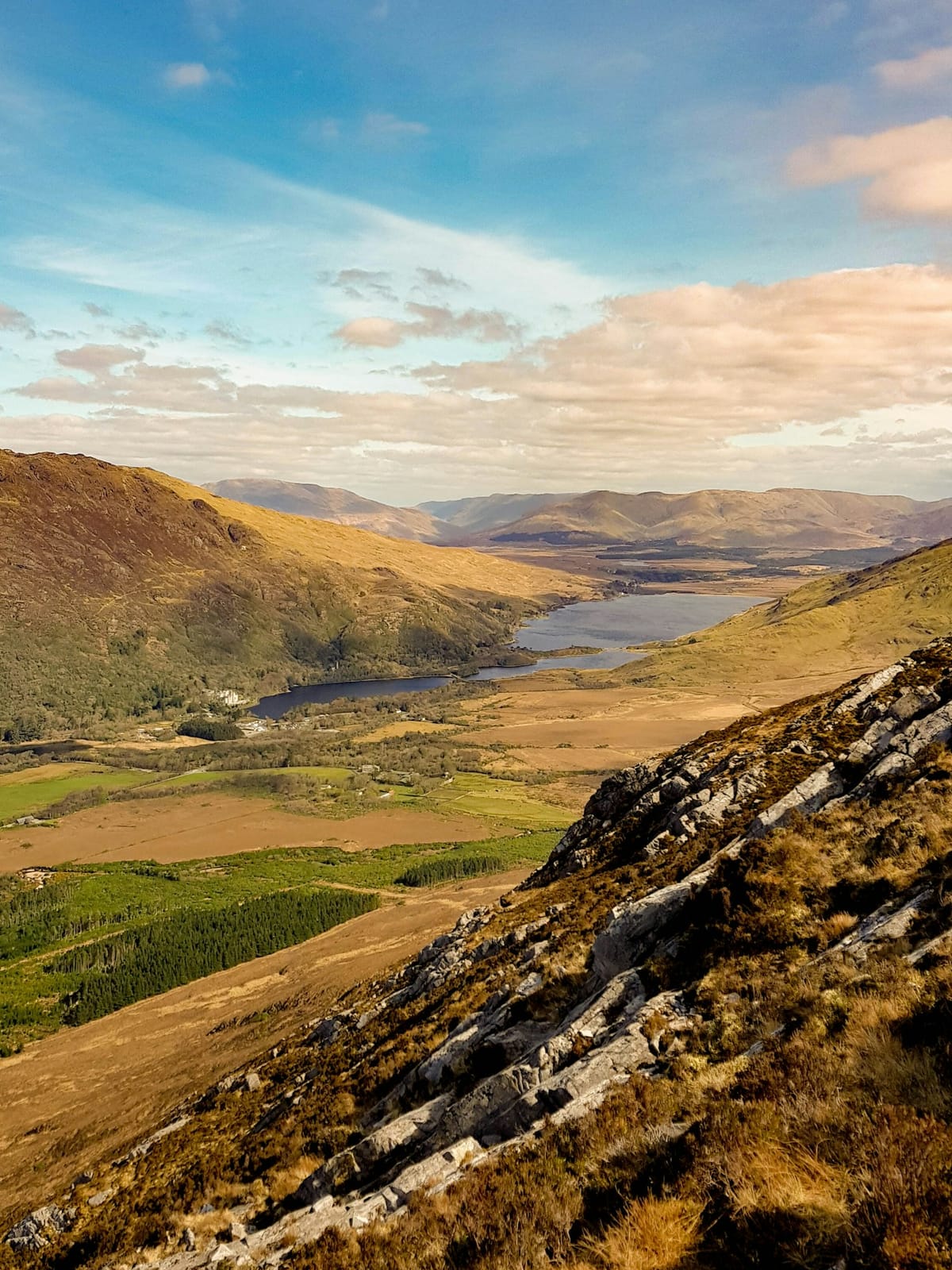
The Aran Islands are visible from the Galway waterfront on a clear day — three limestone islands in Galway Bay whose stone walls, prehistoric forts (Dún Aonghasa is perched 90 metres above the Atlantic), and Gaelic-speaking population make them the most concentrated expression of the Irish west. Connemara, north of Galway, is the vast bogland landscape of the west coast, with the Twelve Bens mountains and the Atlantic inlets of Killary Harbour — the specific quality of western Irish light that has been the subject of landscape painting for two centuries.
How many days in Ireland
| Duration | Best for | Route |
|---|---|---|
| 5–6 days | Brief first visit, Dublin-focused | Dublin (3 nights), Glendalough day trip, Cork or Galway (1 night) |
| 7–8 days | Complete first visit, the essential circuit | Dublin (1), Glendalough & Kilkenny (1), Cork (1), Ring of Kerry (1), Cliffs of Moher (1), Galway (2) |
| 10–11 days | Unhurried circuit with depth | Dublin (2), Wicklow (1), Kilkenny (1), Cork (1), Ring of Kerry (2), Dingle (1), Cliffs of Moher (1), Galway (2) |
| 13–14 days | Complete Ireland including the north | Full southern route plus Belfast, Donegal, Giant's Causeway, and Connemara depth |
When to visit Ireland
Ireland's weather is variable year-round, but seasons shift the experience. Spring (April–May) has milder weather and the countryside at its greenest. Summer (June–August) is warmest and the daylight stretches long — sunset at 10 PM in early June — but coastal roads and tourist sites are busiest and accommodation is at peak prices. Autumn (September–October) is many travellers' preference: the summer crowds thin, the weather is usually settled, and the light is extraordinary. Winter (November–March) is the quietest season with the lowest prices, though the north is cold, the days are short, and many smaller hotels and restaurants close or reduce hours.
Avoid Easter week and school holidays when Irish families travel domestically. The Ring of Kerry is peaceful outside July and August. Dublin is enjoyable year-round but least crowded from November to March.
Getting around Ireland
Ireland's roads are manageable but require a different approach than motorways elsewhere. Outside the major N roads (motorways), Irish roads are narrow, winding, and shared with tractors and lorries. Speed limits are strict and camera-enforced. You'll drive on the left. Rain is common and the light changes fast.
A private vehicle with a driver is the only practical option for first-timers. The freedom to stop at small villages, walk into a field, and explore without worrying about navigation is the whole point. Distances are short — Dublin to Galway is approximately 150 miles (240 km), Galway to Cork is approximately 150 miles — so a day's drive covers substantial ground.
Buses connect major towns but are slower and less flexible. Flying between cities is unnecessary — Ireland is too small for it to save meaningful time.
First-timer mistakes to avoid
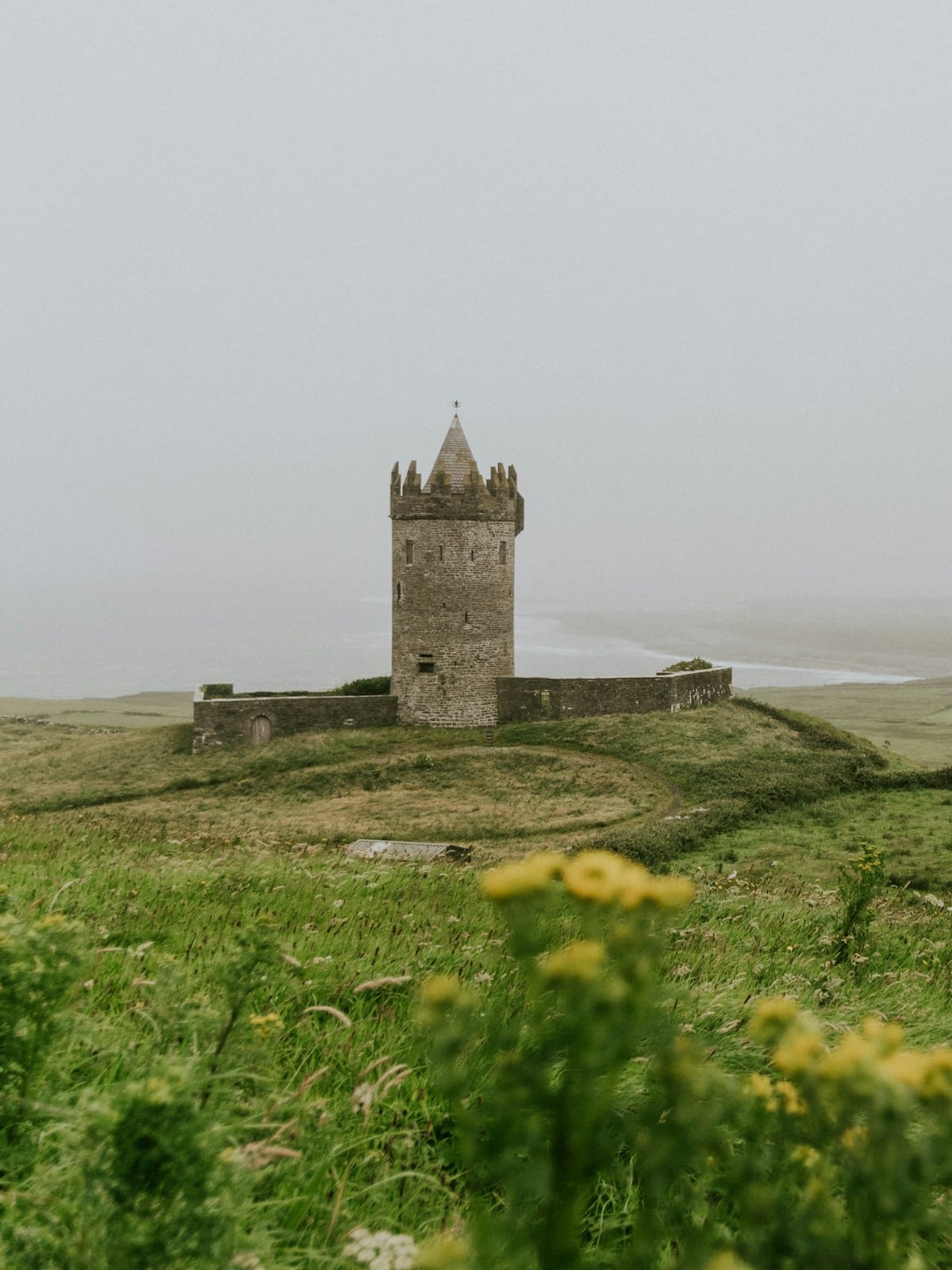
Dismissing small villages: the character of Ireland is in places like Dingle, Kinsale, and Doolin, not in the major cities. Don't rush through the countryside. Underestimating drive times: Irish roads are slower than their distance suggests. A 100-mile (160 km) drive takes three hours, not two. Building an itinerary that tries to cover both the north and south in one week: choose either the south (Cork, Kerry, Cliffs, Galway) or the north (Belfast, Donegal, Giant's Causeway). Trying to do both requires fourteen days minimum.
Not planning for Irish weather: bring layers and waterproofs. The weather can change three times in an hour and the west coast is cloudier than the east. Not discovering the pubs: pub culture is real, the Guinness is different in Ireland, and some of the best conversations happen in small-town bars where no tourists exist.
Practical information for North American visitors
Entry: US and Canadian passport holders can enter Ireland visa-free for up to 90 days. Check current rules before travel.
Money: Ireland uses the euro (€). Northern Ireland, across the border, uses the pound sterling (£). ATMs are ubiquitous. Card payments are widely accepted in cities and larger towns; smaller villages and countryside establishments may be cash-only.
Driving: You'll drive on the left. Car rental is straightforward through major companies. International driving permit is not required for US or Canadian residents — your domestic license is sufficient. Petrol is sold by the litre and prices fluctuate. Parking is available in most towns but city centres have paid parking zones.
Language: English is universal. Irish (Gaelic) is the first official language, but English dominates daily life. Signage is often bilingual. No barrier to communication.
Tipping: Tipping is customary in restaurants (10–15% is standard) and for taxis (round to the nearest euro). Gratuities for your private guide are customary at the end of the trip — ask us for guidance on amounts.
Food allergies: Irish restaurants take dietary restrictions seriously. Communicate clearly and in advance. We brief your guide, who will communicate on your behalf in restaurants.
How we plan your Ireland trip
Every Black Deer Travel trip is private and custom. We build your Ireland itinerary around your calendar and your curiosities — monastic history, food, landscape, literary sites, or a mix. We work with Irish guides and drivers who know the smaller towns, the best restaurants, and where to stop without a guidebook. Every day is shaped around you — your pace, your appetite, your energy. A real human responds within one working day with a personalised proposal, exact pricing, and your guide's background. No obligation.
Frequently asked questions
Is seven days enough for Ireland?
Seven days covers the essentials — Dublin, the south, Ring of Kerry, and Galway — without rushing. Each place gets enough time for depth. If you can add a few days, extend Galway or add the northern coast (Belfast, Giant's Causeway, Donegal). Two weeks lets you do both the north and south unhurried.
Do I need to drive in Ireland?
For first-timers and most visitors, a private vehicle with a driver is the best option. It gives you freedom to explore small villages, stop at views, and navigate the winding roads without stress. If you're comfortable driving on the left and navigating narrow Irish roads, car rental works. Buses connect major towns but are slower.
What should I pack for Ireland?
Layers and waterproofs are essential — the weather changes fast and can be rainy. Comfortable walking shoes for castle grounds and coastal paths. A camera for the light and landscapes. Modest dress is respectful in smaller towns and churches. The west coast is windier and cloudier than the east, so expect weather changes.
Which Irish cities are worth visiting?
Dublin is the arrival point and worth two nights if you can. Galway is where the west coast character concentrates and has excellent restaurants. Cork is smaller and more relaxed than Dublin. Kilkenny is a beautiful medieval town. Dingle is small but has serious food and literary history. The countryside — Glendalough, the Ring of Kerry, Connemara — is where Ireland's character lives.
What is the best pub experience in Ireland?
The best pubs are not in Temple Bar or the obvious tourist areas. Look for small neighborhood pubs in towns like Dingle, Kinsale, or Doolin where the Guinness is poured by someone who cares and the conversations are real. The slow pour of a proper Guinness — two pints takes almost ten minutes — is part of the ritual.
Is travel insurance required for Ireland?
Travel insurance is not required but strongly recommended. It covers medical emergencies, trip cancellation, and evacuation — valuable safeguards when travelling internationally. We can arrange it on request.
 Quick cookie chat