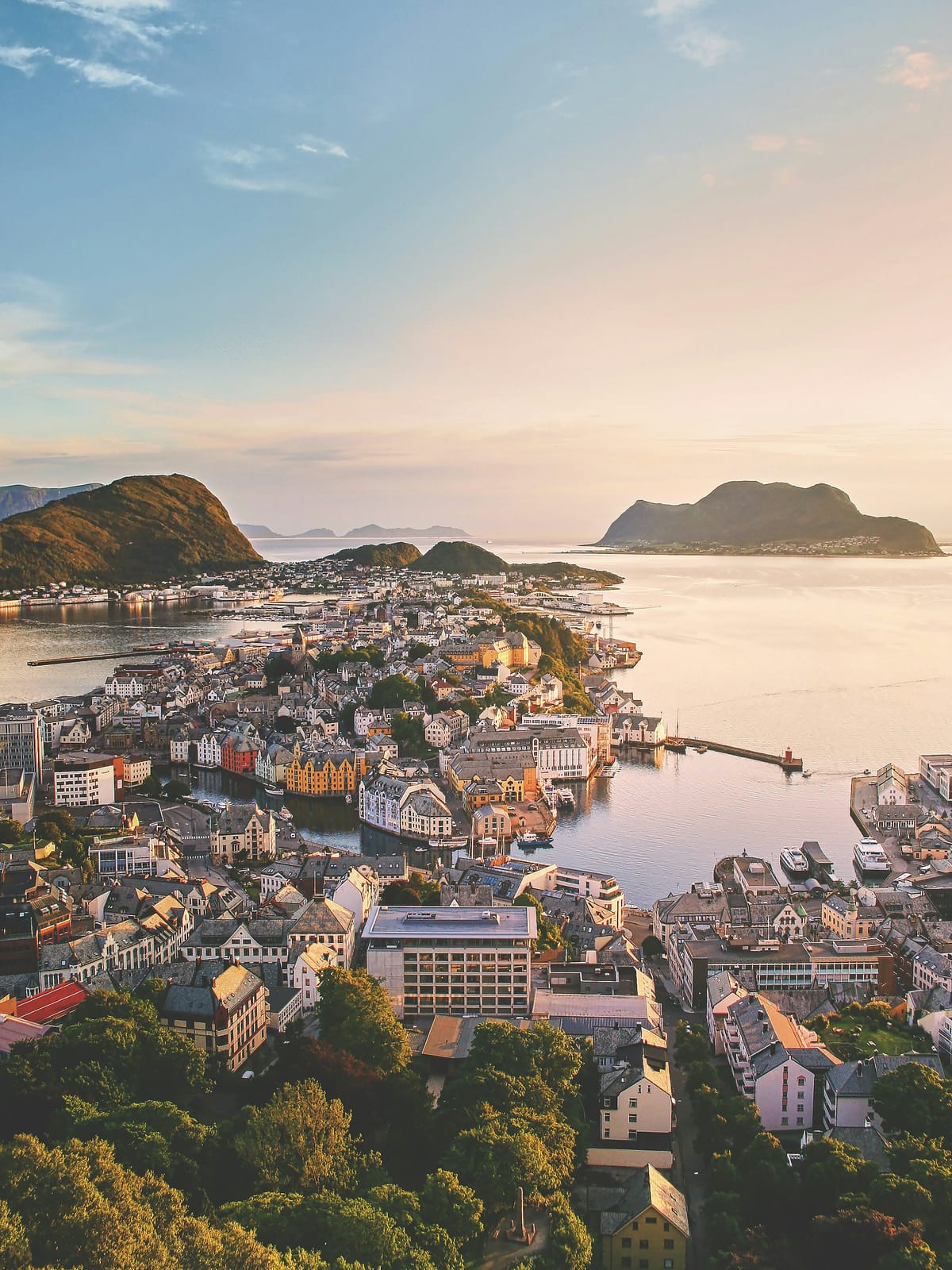
The best time to visit Norway
The best time to visit Norway is late May to August. The fjords are at their fullest, the waterfalls run hard with snowmelt, and most mountain roads are open. For the Northern Lights, go between late September and late March, in the far north.
Norway is really two trips in one. The fjords belong to summer and early autumn. The Arctic, around Tromsø and the Lofoten Islands, belongs to the dark months. Choose the season first, because it decides which parts of the country you will see at their best.
Summer fjords and mountain roads
From late May to August, the fjords are busiest and easiest to reach. Trains and ferries run full timetables, and boats sail the Nærøyfjord, a UNESCO World Heritage fjord, through the summer. Days in the fjords are usually 15 to 22°C (59 to 72°F). A light jacket is enough most of the time, with a warm layer for the water.
The mountain roads are the other summer story. Trollstigen, the steep road between Åndalsnes and Valldal, and the high road above Geiranger, another UNESCO fjord, are closed by snow for much of the year. They usually open from late May or June and close again in autumn. The exact dates change with the snow, so we check them when we confirm your trip.
The Geiranger and Trollstigen roads are not on every route we run. If they matter to you, tell us early, and we will plan the drive around the weeks they are open.
The midnight sun in the north
Above the Arctic Circle, the sun stays up for weeks around midsummer. In Tromsø, the sun does not set from roughly late May to late July. At midnight the light is soft and gold, and you can walk the harbour without a torch.
The midnight sun changes how you spend your days. Nights do not get dark, so pack an eye mask for sleep. Summer is the time for the cable car up to Storsteinen, a day kayaking on the fjord, and long hikes over the hills. Pack a jacket too. A bright midnight can still be cold in the wind.
Oslo and Bergen have long, bright evenings in June, but the sun still sets there. The midnight sun is a northern thing.
Northern Lights season in Tromsø and Lofoten
The Northern Lights season runs from late September to late March. The best nights are usually December to February, when the nights are longest. Tromsø and the Lofoten Islands are both far north, under the aurora zone, and both work well as a base.
The aurora is never guaranteed. Clouds can cover the sky on any night, however long you stay. That is why we plan several nights in the Arctic rather than one. Your guide watches the forecast and drives out to darker skies when it looks clear.
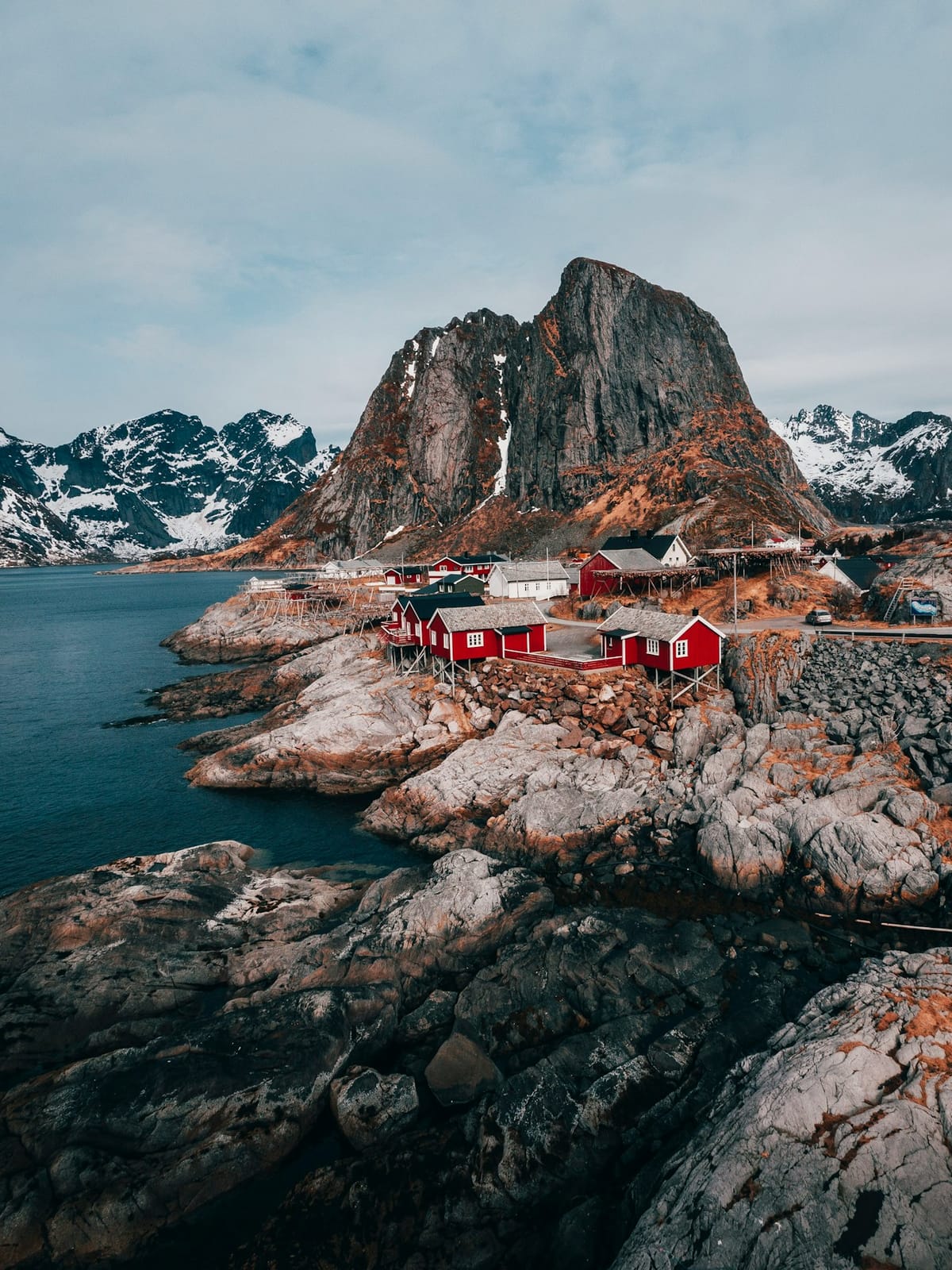
Lofoten offers a different kind of winter. Red fishing huts stand on the rocks above the water, and mountains rise straight out of the sea. Tromsø is the city choice, with dog sledding and the Arctic Cathedral close by.
Polar night in winter
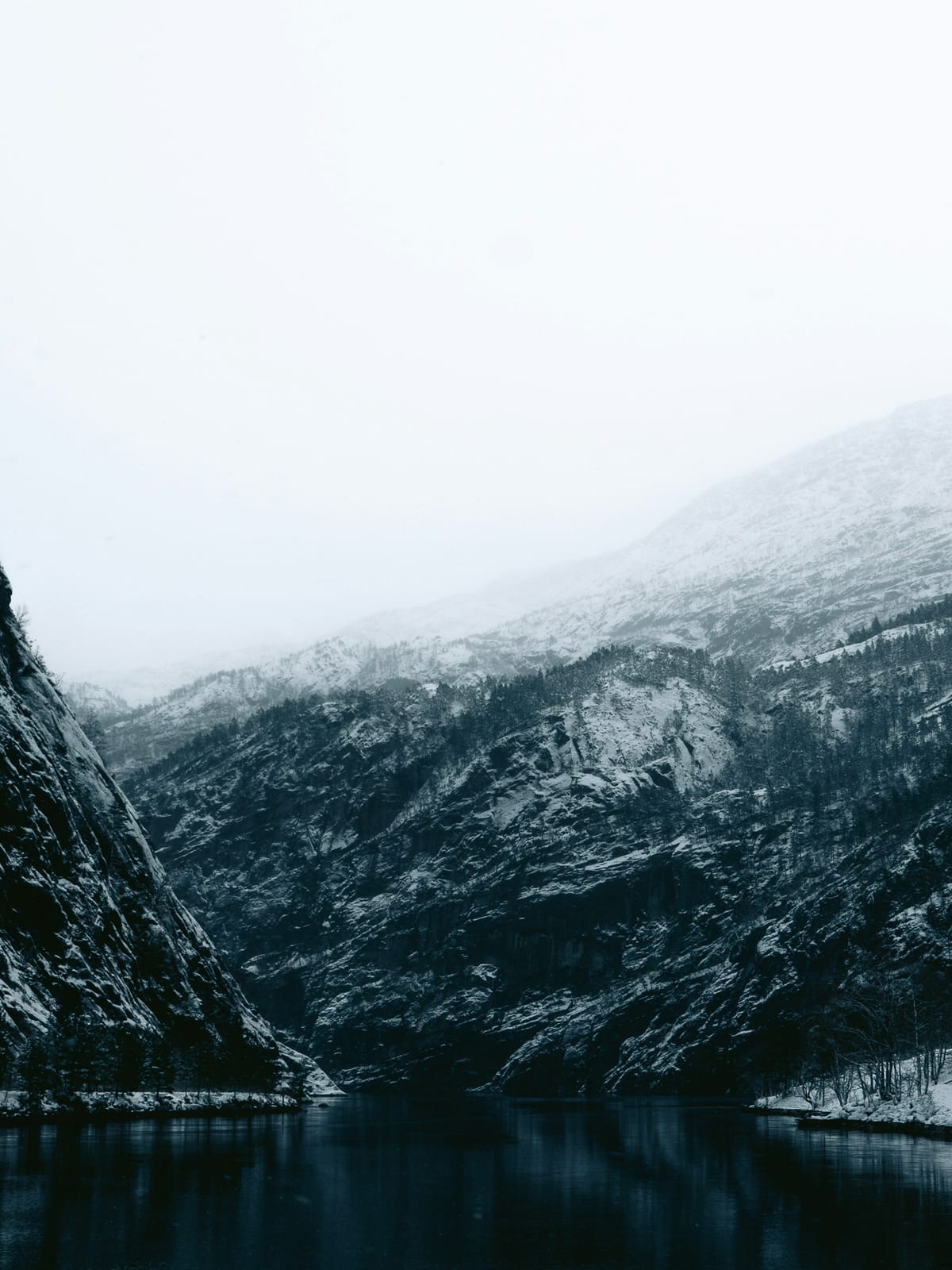
In the far north, the sun does not rise for several weeks in winter. In Tromsø, this polar night runs from roughly late November to mid-January. You get a few hours of blue light around midday, then full dark.
Polar night is not gloomy if you plan for it. Days are for dog sledding through the birch forest and a visit to a Sámi reindeer farm. Evenings are for a long dinner, a warm room and a look at the sky. Dress in proper layers. Tromsø in January is often around -5°C (23°F), and wind makes it feel colder.
Further south, winter is quieter. The fjords are white with snow, boats and buses run to reduced timetables, and some small fjord hotels may stay closed. The Flåm Railway runs all year, so it is one of the few fixed points in a winter plan. A winter trip to the south is a different trip, and we plan it around the winter timetable, not the summer one.
Spring, with snow still in the mountains
April and early May are quiet months. The fjords are cold, and the high mountains are still under snow. The Hardangervidda plateau, which the Bergen Railway crosses, is often snow-covered into May.
Late May is when it turns. Snow melts into the fjords, and the waterfalls run at full strength, especially along the Nærøyfjord. In the Hardanger, apple and cherry orchards come into blossom. Spring suits anyone who wants waterfalls and few people, as long as they pack for cold: a warm coat, gloves and a waterproof.
Autumn colours and quieter fjords
September is a strong month for Norway. The summer crowds have thinned, the light is still good, and the birch and rowan turn gold and red on the mountainsides. The fjords feel wider with fewer boats on the water.
October brings rain, wind and the first snow on the high ground. Daylight shortens fast. The Northern Lights season is well under way by then, and whale watching runs from the Tromsø fjords from roughly October to January.
Autumn suits anyone who wants fewer people and does not mind weather. It suits a tight plan with many boat legs less well, because timetables thin out as the season goes on. Coffee and a cinnamon bun at the harbour, with the water still and the hills going gold, is a good way to start a September day.
Rain in Bergen, in any month
Bergen is one of the rainiest cities in Europe. Rain falls in every season, so there is no month that is guaranteed dry. Pick the month for the light and the fjords, and pack a waterproof jacket for all of them.
The rain is part of the place. Bryggen, the old Hanseatic wharf, looks its best in wet light, and the fish market is busy whatever the sky is doing. When the cloud lifts from Mount Fløyen, the view over the harbour makes the wait worth it. Read more in our Bergen city guide.
Month by month at a glance
Weather is for the fjords and Bergen unless a row says otherwise. Use the table to find your window, then read the season sections above for the detail.
| Month | Weather | Crowds | Good for |
|---|---|---|---|
| January | Dark and cold, snow on the mountains | Low | Northern Lights, polar night in Tromsø |
| February | Cold, still dark | Low | Aurora, dog sledding |
| March | Cold, days lengthening | Low | Late-season aurora, snow scenery |
| April | Cold, high snow | Low | Quiet cities, snowy mountains |
| May | Cool, long days, snowmelt | Rising | Waterfalls, orchard blossom, midnight sun begins |
| June | Mild, very long light | Busy | Waterfalls, midnight sun, mountain roads open |
| July | Warmest, usually 15 to 22°C | Busy | Fjords, midnight sun in Tromsø |
| August | Mild, evenings shortening | Busy, easing late | Fjords, hiking, mountain roads |
| September | Cooling, first colour | Easing | Autumn colours, fewer boats |
| October | Cold, wet, first snow | Low | Northern Lights, whale watching, quiet fjords |
| November | Dark, wet and cold | Low | Quiet cities, polar night begins in Tromsø |
| December | Very short days, cold in the north | Moderate around holidays | Northern Lights, winter cities |
How we plan around the seasons
Every Black Deer Travel trip is private and built around your dates. In Norway the calendar matters more than in most countries, because trains, boats and mountain roads all follow the season. Summer seats on the Flåm Railway and the fjord boats sell out early, so we book them as soon as we confirm your dates.
Tell us your month and what you want most: the fjords taken slowly, the midnight sun, or the lights. We will tell you honestly which Norway you will get. For a summer fjord trip, start with Essence of Norway. For the year-round mix of fjords and Arctic, look at Norway Fjords and Northern Lights. For the full length of the country, see Epic Norway.
New to Norway? Read our Visit Norway guide first, then compare the 7 day and 10 day routes. All our Norway trips are listed on the Norway page.
Frequently asked questions
What is the best time to visit Norway?
Late May to August for the fjords, waterfalls and long days. Late September to late March for the Northern Lights, with December to February the darkest. July is the warmest month and also one of the busiest.
When is the midnight sun in Norway?
In the far north, around Tromsø, roughly late May to late July. Further south, June evenings are very long, but the sun still sets. Ask us for the exact nights when you plan your trip.
When do the mountain roads open?
Usually from late May or June, closing again around October. Trollstigen and the Geiranger road are the best known. Snow decides the exact dates, so we check them when we plan your trip.
Can you guarantee the Northern Lights?
No. The aurora depends on solar activity and on clear, dark skies, and nobody can promise either. Several nights in Tromsø or Lofoten give you more chances, and a guide who watches the forecast.
Is Norway worth visiting in winter?
Yes, for the Arctic and the lights. The south is quieter, with snow on the fjords, short days and reduced boat timetables. Plan it as a winter trip, not a summer one in cold weather.
Does it always rain in Bergen?
Not always, but often. Bergen is one of Europe's rainiest cities, so pack a waterproof in any month. Dry weather in the city is a bonus, not something to plan around.
 Quick cookie chat