
The route at a glance
A 2 week Greece itinerary works best when it moves in one direction. This one starts in Athens, crosses to the Peloponnese, then sails south through the Cyclades to Mykonos, Naxos and Santorini. You fly home from the last island, so you never double back.
That is thirteen nights across five bases. Athens gets four nights, Nafplio two, and the islands two, two and three. The first six days are on the mainland. Most two-week plans skip that part, and it is where the ancient sites are: Delphi, Mycenae, Epidaurus. The islands feel like a reward after it, not the whole trip.
Want more islands and less mainland? Our 10 day Greece itinerary adds Crete and keeps the mainland to Athens. For the full picture of the country, see Greece on our destinations page.
The 2 week Greece itinerary, day by day
| Day | Base | What you do |
|---|---|---|
| 1 | Athens | Arrive, then a slow walk through Plaka and Monastiraki Square |
| 2 | Athens | Acropolis at opening time with an archaeologist guide, then the Acropolis Museum |
| 3 | Athens | Day trip to Delphi, the oracle sanctuary in the mountains (about two and a half hours each way) |
| 4 | Nafplio | Drive past the Corinth Canal to Mycenae and its Lion Gate, then on to Nafplio |
| 5 | Nafplio | Theatre of Epidaurus in the morning, Nafplio's old town and harbour in the afternoon |
| 6 | Athens | Slow morning in Nafplio, drive back to Athens, late afternoon at the ancient Agora |
| 7 | Mykonos | Ferry from Piraeus or a short flight to Mykonos, windmills and Little Venice at sunset |
| 8 | Mykonos | Boat to Delos, the birthplace of Apollo, then the south coast beaches |
| 9 | Naxos | Ferry to Naxos, the Portara and the old town at sunset |
| 10 | Naxos | Inland villages in the morning, a long lunch, then a swim |
| 11 | Santorini | Ferry south to Santorini, first view of the caldera from the rim |
| 12 | Santorini | Caldera path from Fira to Oia (or by car), winery tasting in the afternoon |
| 13 | Santorini | Free day, sunset from Imerovigli or Oia, dinner with a view booked ahead |
| 14 | Santorini | Transfer to Santorini airport for a short flight to Athens and home |
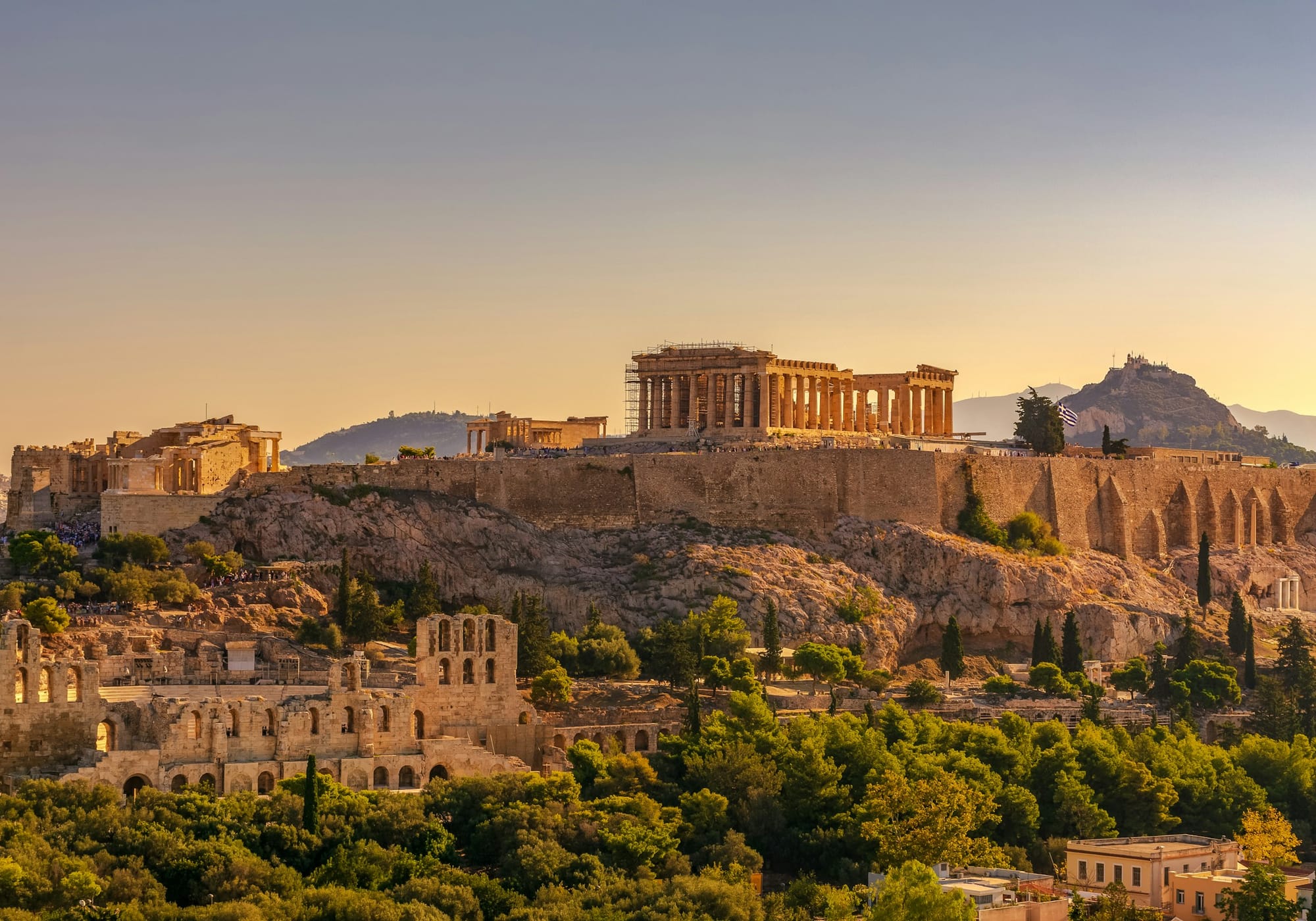
Athens: the Acropolis first
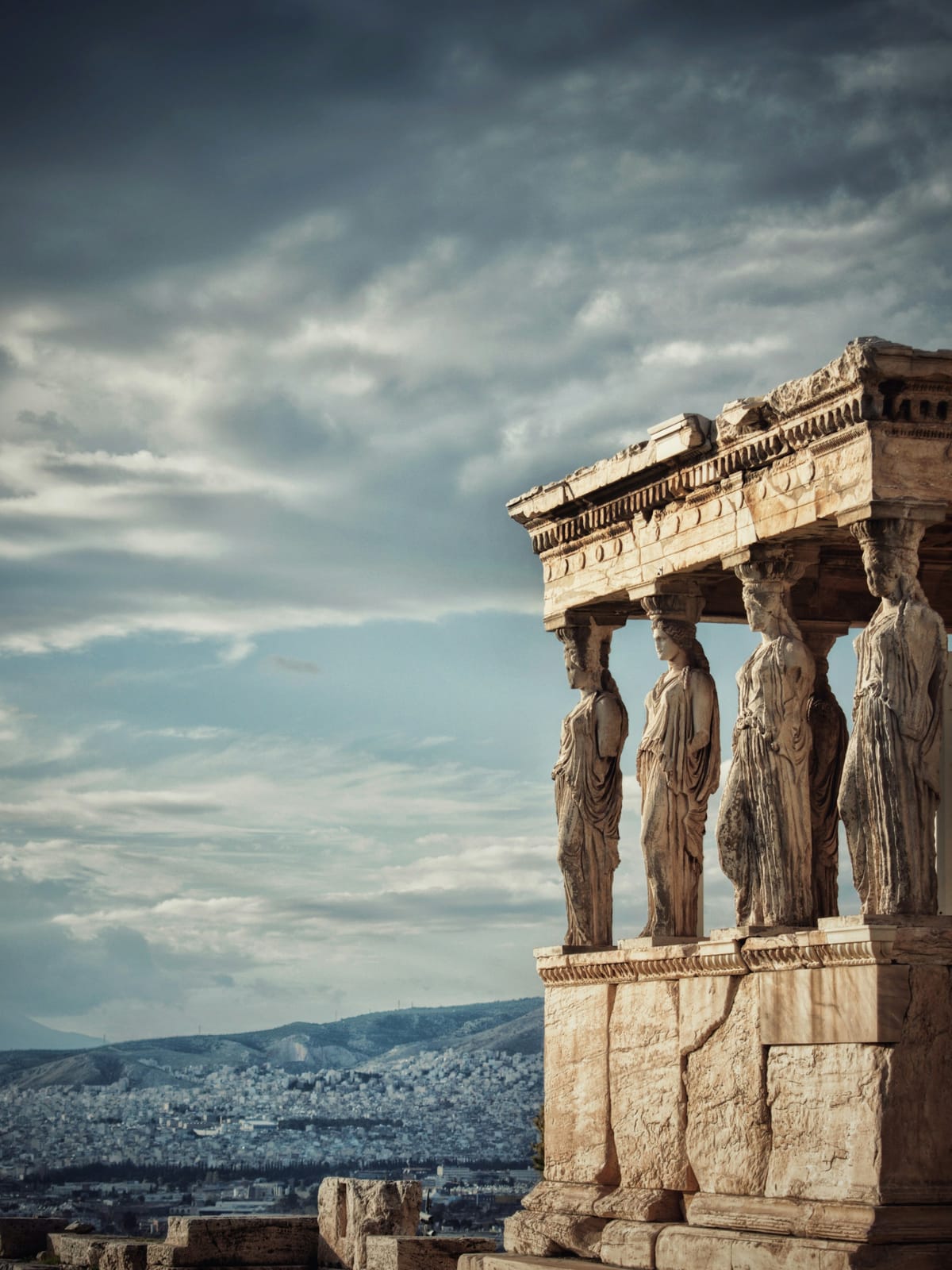
Athens is where the Greek story starts, and the Acropolis is the place to start. Go up in the first hour after opening, when it is cooler and quieter than at midday. Your archaeologist guide will point out what the eye misses. The columns of the Parthenon lean slightly inward, and its base curves upward, so the building looks straight from the ground.
The Acropolis Museum sits at the foot of the rock. Its galleries hold the original friezes and pediment sculptures, with glass walls that look back at the Parthenon. Afterwards, walk down to the ancient Agora, which is flatter and far less crowded. The Temple of Hephaestus there is one of the best-preserved Greek temples.
Plaka's lanes run up the hill under the rock, and Monastiraki Square has tables for your first evening. After that, let the city set the pace.
Delphi: a full day from Athens
Delphi is the day trip we would not skip. It is about two and a half hours each way by road, so plan a full day and a driver rather than a bus.
The sanctuary sits on the slopes of Mount Parnassos, above the Gulf of Corinth. Walk the Sacred Way past the small treasuries to the Temple of Apollo, then climb to the theatre, where the view opens over the olive terraces. The museum holds the bronze Charioteer, one of the finest survivors of ancient Greek sculpture.
Our Essence of Greece tour includes Delphi with a private guide and a private driver for the excursion, so you don't need to plan the road.
The Peloponnese: Corinth, Mycenae and Epidaurus
Yes, the Peloponnese fits a two-week trip, and it is the part of Greece most visitors skip. The drive to Nafplio takes you past the Corinth Canal, a narrow cut through the isthmus between the Gulf of Corinth and the Saronic Gulf.
Mycenae is the next stop, a Bronze Age citadel that sits above the plain. Walk through the Lion Gate, the main entrance, then on to the Treasury of Atreus, a beehive-shaped tomb built of cut stone. It is easy to see why the site has held people's attention for so long.
Epidaurus is about 40 minutes by car from Nafplio. Its ancient theatre is known for acoustics so exact that a whisper at the centre of the stage can be heard in the top rows.
Our Essence of Greece tour covers Corinth, Mycenae, Nafplion and Delphi with a private driver, if you would rather not plan the mainland yourself.
Nafplio: two nights in a harbour town
Nafplio is the easiest base in the Peloponnese. It is a small harbour town of neoclassical houses and Venetian walls, and most of it can be walked in an afternoon.
It was the first capital of modern Greece, from 1829 to 1834. The old town climbs toward the Palamidi fortress, a long walk up steps. The Bourtzi, a small Venetian fort, sits on an islet in the harbour, and boats run out to it in season.
Give the afternoon of day five to the old town and the fortress, then eat dinner by the water. The town is quietest after the day trips leave, which is when it is at its best.
Mykonos: two nights on the first island
Mykonos is the island for your first nights on the islands. Ferries run from Piraeus, and short flights leave from Athens. Check the timetable for your dates, because sailings change between seasons. In July and August the meltemi, a strong northerly wind, can delay boats.
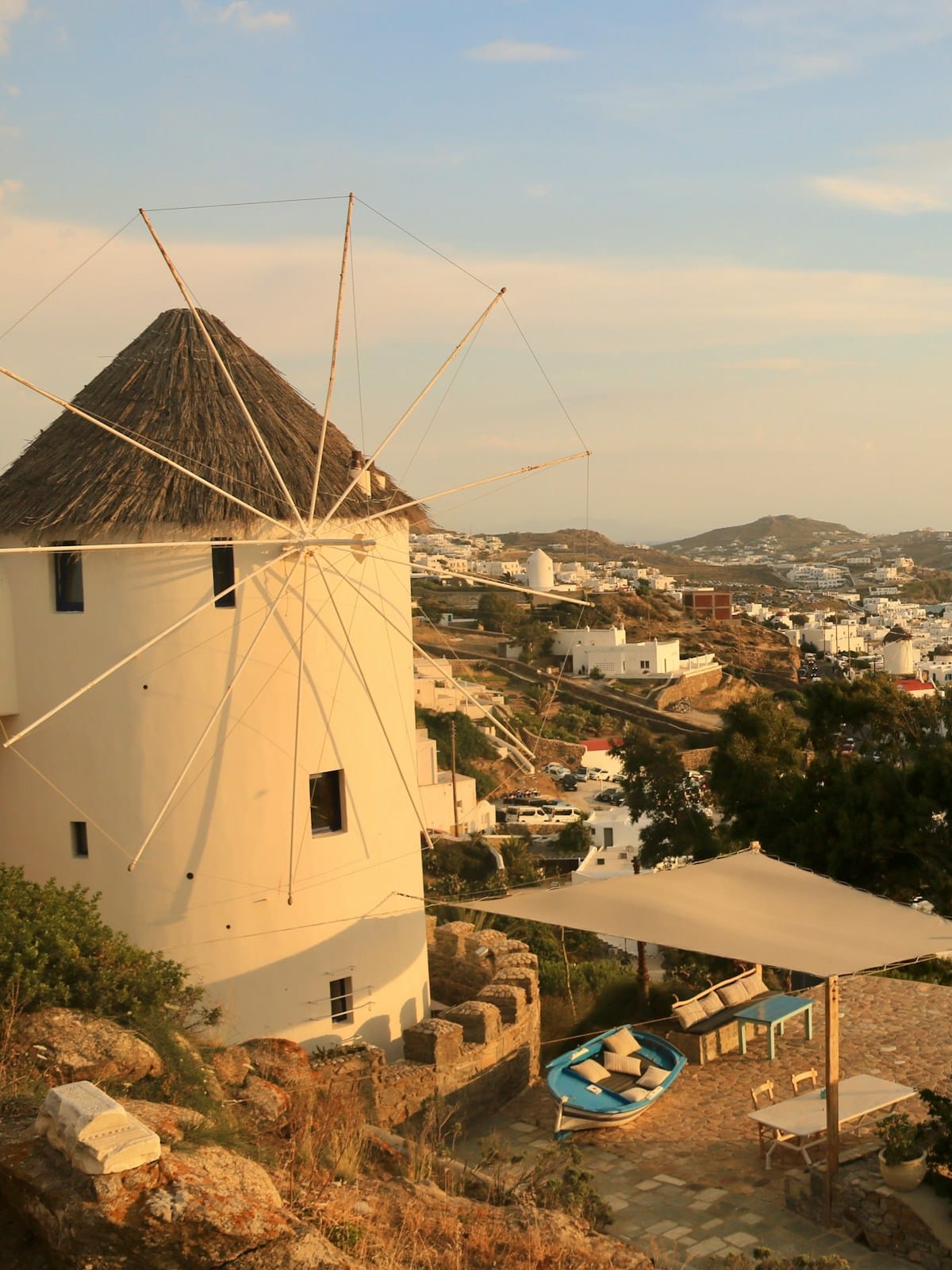
Walk Mykonos Town in the morning, before the day-trippers reach the lanes. The whitewashed streets were built to confuse pirates, and they still do. In the evening, go to Little Venice, where old captains' houses hang over the water, then climb to the windmills for the sunset.
On day eight, take a boat to Delos, about 30 minutes away. The island is a UNESCO World Heritage Site, the birthplace of Apollo in Greek myth, and it has no residents. Bring a hat and water, because there is almost no shade. Our Greek Islands Discovery tour follows the same three islands, with private guides throughout.
Naxos: the island that feels lived in
Naxos is the island to pick if you want villages, beaches and a working island rather than a postcard. It is the largest island in the Cyclades, so there is room to spread out.
The Portara is the island's landmark: a marble doorway that stands alone on a small islet at the harbour. It was once part of a temple to Apollo that was never finished. Walk out to it at sunset, when the light catches the marble.
The old town, or Chora, climbs toward the Venetian kastro above the harbour, with lanes of whitewashed houses and marble doorways. Inland, the villages serve home-cooked food. Give one day to the interior and one to the beach, and you won't repeat yourself.
Ferries from Mykonos to Naxos are short, but timetables vary, so check the sailings before you book.
Santorini: three nights on the caldera
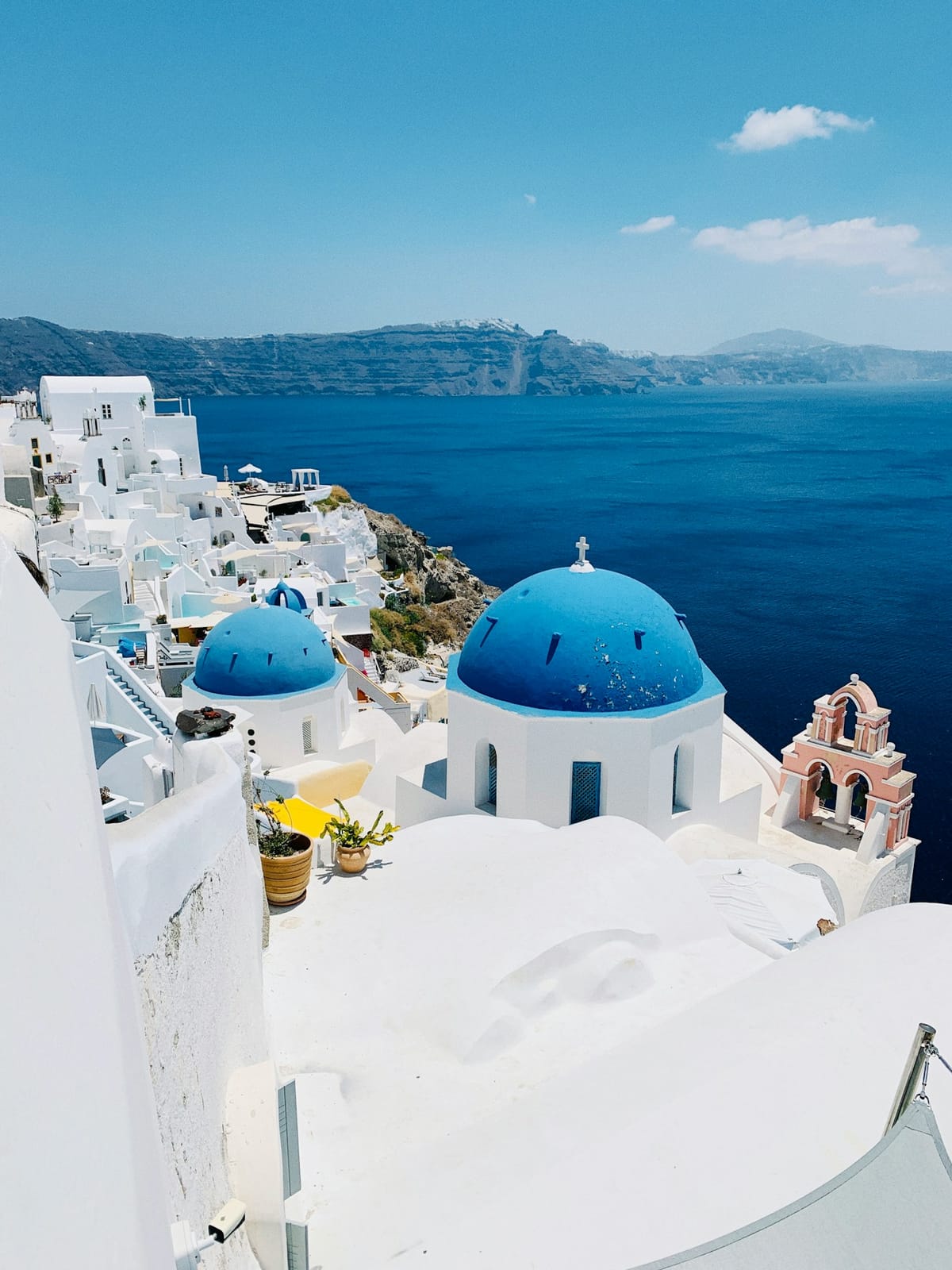
Santorini is the last island, and the one to save for the final three nights. The island is the rim of a volcano that collapsed about 3,600 years ago, leaving a sunken centre of deep blue water. The towns of Fira, Firostefani, Imerovigli and Oia sit along the top of the cliff, each with its own view.
Walk the caldera path from Fira to Oia. It is about 10 kilometres and takes around three hours, so start early and carry water. Or take a driver and stop at the viewpoints. Oia is busiest at sunset in summer, so have dinner in Imerovigli or Firostefani and walk over for the view.
Assyrtiko, the island's white grape, grows in volcanic soil. The vines are trained low in woven baskets to shelter them from the wind. Finish the afternoon at a winery with a view down into the caldera. Our Greek Islands Discovery tour includes a wine tasting at a volcanic estate, if you want that arranged for you.
Where to stay
Athens: Plaka or Koukaki, a walk from the Acropolis. Nafplio: a small hotel in the old town, close to the harbour. The town is compact, so the location matters more than the size of the room. Mykonos: Mykonos Town, for dinner on foot, or a quieter hotel on the hillside above it. Naxos: Chora, the old town, for evening walks and tavernas. Santorini: a caldera-rim room in Imerovigli or Firostefani.
Book Santorini first. Caldera-facing rooms are limited and sell out early in summer. Many are built into the cliff with steps rather than lifts, so ask for a ground-floor room if you have heavy bags.
When to go
May, June, late September and early October are the best months for this route. The sea is warm, the days are long, and the islands are open without the peak crowds of July and August.
July and August are hot. The meltemi blows through the Cyclades, and Mykonos and Santorini are full. From November to March, many island hotels and ferries cut back or close, so a winter version of this trip works best in Athens and the Peloponnese.
Easter week is busy on the mainland and the islands. Whatever the month, check every ferry and flight for your dates before you book, because schedules change from season to season. For background on the country, read our Visit Greece guide.
Ways to change the route
Swap Naxos for Paros if you want a quieter island with a relaxed harbour town. Both sit in the central Cyclades, so the ferry moves should be similar. Check the timetable for your dates.
Add Crete if you want a fourth island. It needs at least three days, so it replaces Naxos rather than sitting alongside it. Our Best of Greece tour ends on Crete, with the Palace of Knossos and the Heraklion archaeological museum, and it is the natural model for that version.
Got only one week? Use our 7 day Greece itinerary as the base, and drop the mainland. Got three weeks? Meteora, the monasteries on the rock pillars of central Greece, is a long drive from Nafplio. It fits better in a separate trip than in the same two weeks.
How we plan it
We are a small team, so we take a limited number of Greece trips each season and plan each one by hand. We book the ferries and flights, the private drivers for the mainland days, the guides in Athens and at Delphi, and hotels chosen for where they sit. We check sailing times against your dates and keep a back-up route in case the wind changes the boats.
One planner on our team stays your contact from the first email to the flight home.
Frequently asked questions
Is 2 weeks enough for Greece?
Yes, for Athens, the Peloponnese and three islands, if you don't mind moving every two or three days. It is not enough to add Crete, Meteora or the Ionian islands as well. For a shorter trip, a 7 or 10 day route is more relaxed.
How many islands can you visit in 2 weeks?
Three is comfortable: Mykonos, Naxos and Santorini, with two or three nights each. Four is possible if you skip the mainland, but every island move costs half a day by ferry or airport.
Is it worth adding the mainland to a Greece trip?
Yes. Athens, Delphi and Nafplio give you the ancient sites in their settings, and they make the islands feel like a reward rather than the whole trip. Plan the mainland for the first half of the trip, then the islands.
Do I need to book ferries in advance?
For summer, yes. Ferry tickets and the best caldera hotels sell out from June to August. Check the sailing times for your dates before you book, because timetables change between seasons.
What is the best month for a 14 day Greece itinerary?
Late May, June or September. The sea is warm, the ferries run a fuller timetable, and the heat and crowds are lower than in July and August. Early October also works well.
Is Santorini worth three nights?
Three nights gives you time for the caldera path, a winery visit and a slow sunset without rushing. Two nights works if you prefer a shorter stay. Either way, book a caldera-view room early.
 Quick cookie chat