The short answer
Greece works best when you split your time between the ancient mainland and the islands. Spend two or three days in Athens for the Acropolis, the Agora, and the Acropolis Museum — then take a ferry east to the Cycladic islands. Mykonos and Santorini are the famous ones, but Paros, Naxos, Ios, and smaller islands like Delos offer the same light and sea without the crowds. If you have a week or more, add Crete — the largest island and the seat of the Minoan civilization, four thousand years old and still extraordinary.
The Greek year splits into seasons. April through June and September through early October are the sweet spot — warm enough to swim, not yet baking. July and August are hot, crowded, and expensive; October onwards cools steadily. Winter is mild, especially in the south, but many island hotels close from November to March.
Why Greece: What you're really visiting
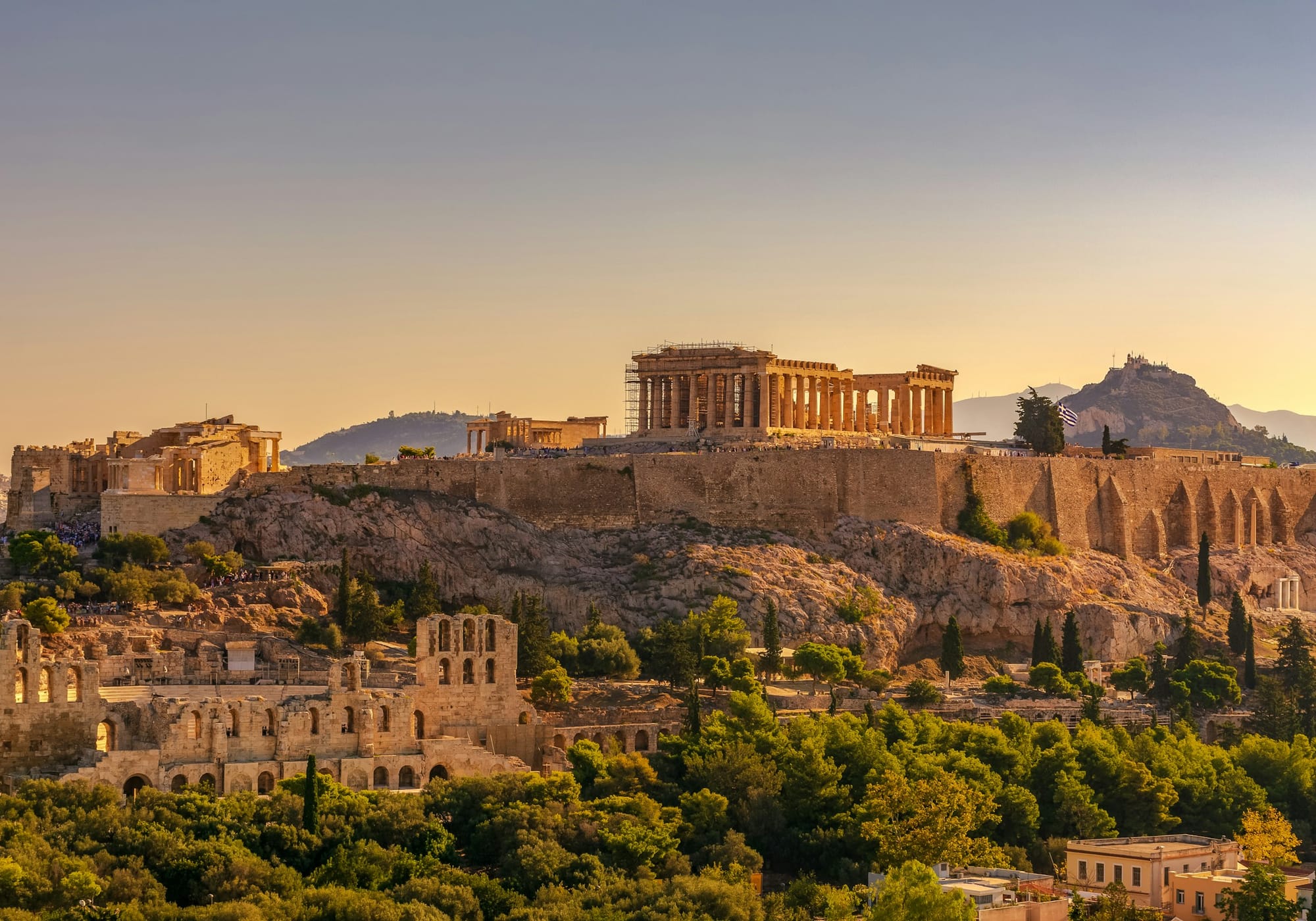
Greece is not a single country but a layering of cultures and time — ancient, Byzantine, Ottoman, Venetian. The Parthenon, built in 447 BC, still teaches us about mathematics and proportion. The Cycladic islands — Mykonos, Santorini, Delos — are white villages against an impossibly blue sea, unchanged in their essentials since the Ottoman era. Crete holds the ruins of the Minoan palace at Knossos, the oldest advanced civilization in Europe, whose art and engineering were not surpassed for three thousand years.
Add to this the practicalities: Greek hospitality is real, Greek wine is worth discovering (Assyrtiko from Santorini's volcanic soil, Agiorgitiko from Nemea), and the food is better and cheaper the further you go from the tourist squares. The light here is particular — the reason painters come back again and again. There is nowhere else quite like it.
The islands worth visiting
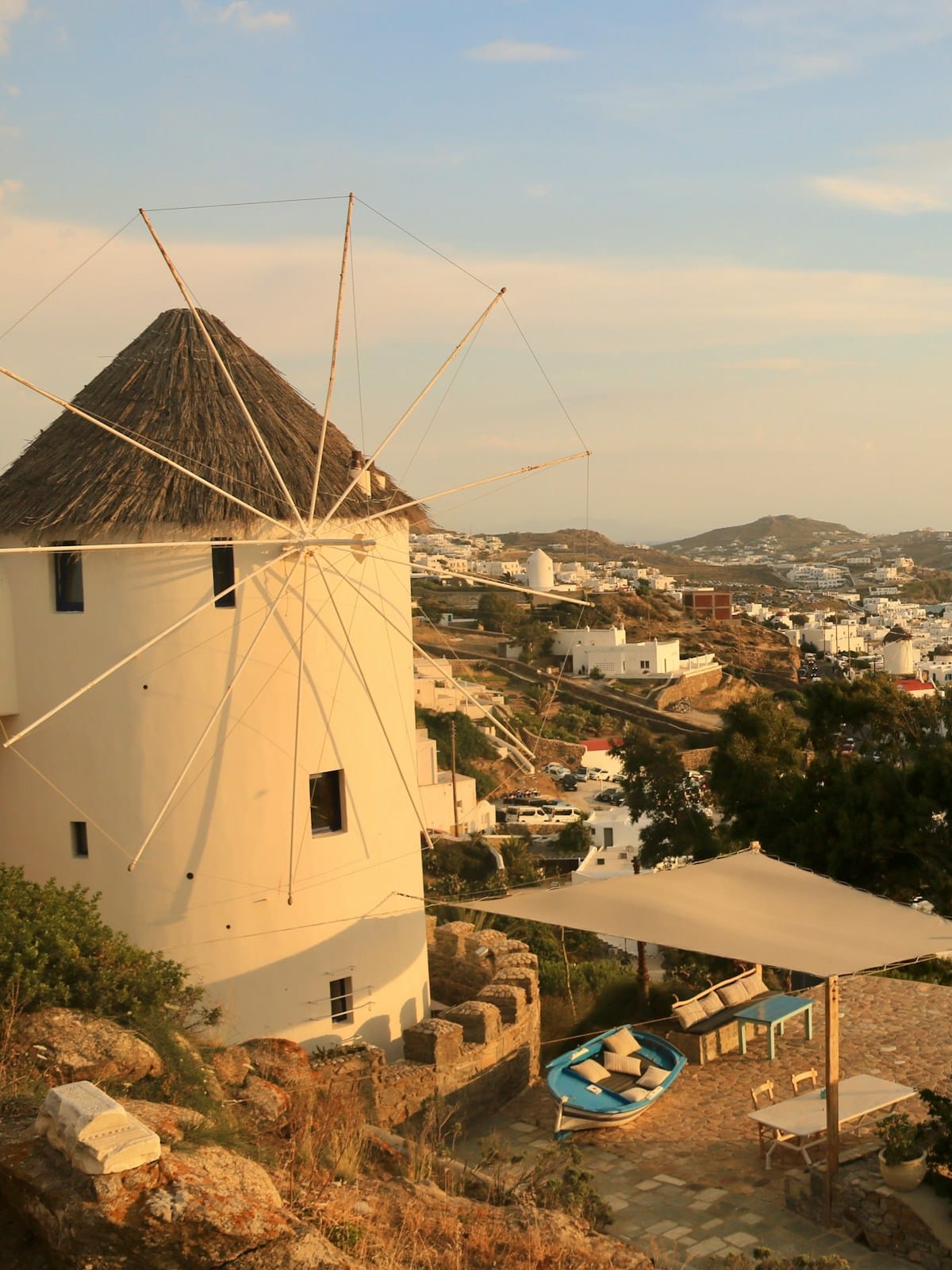
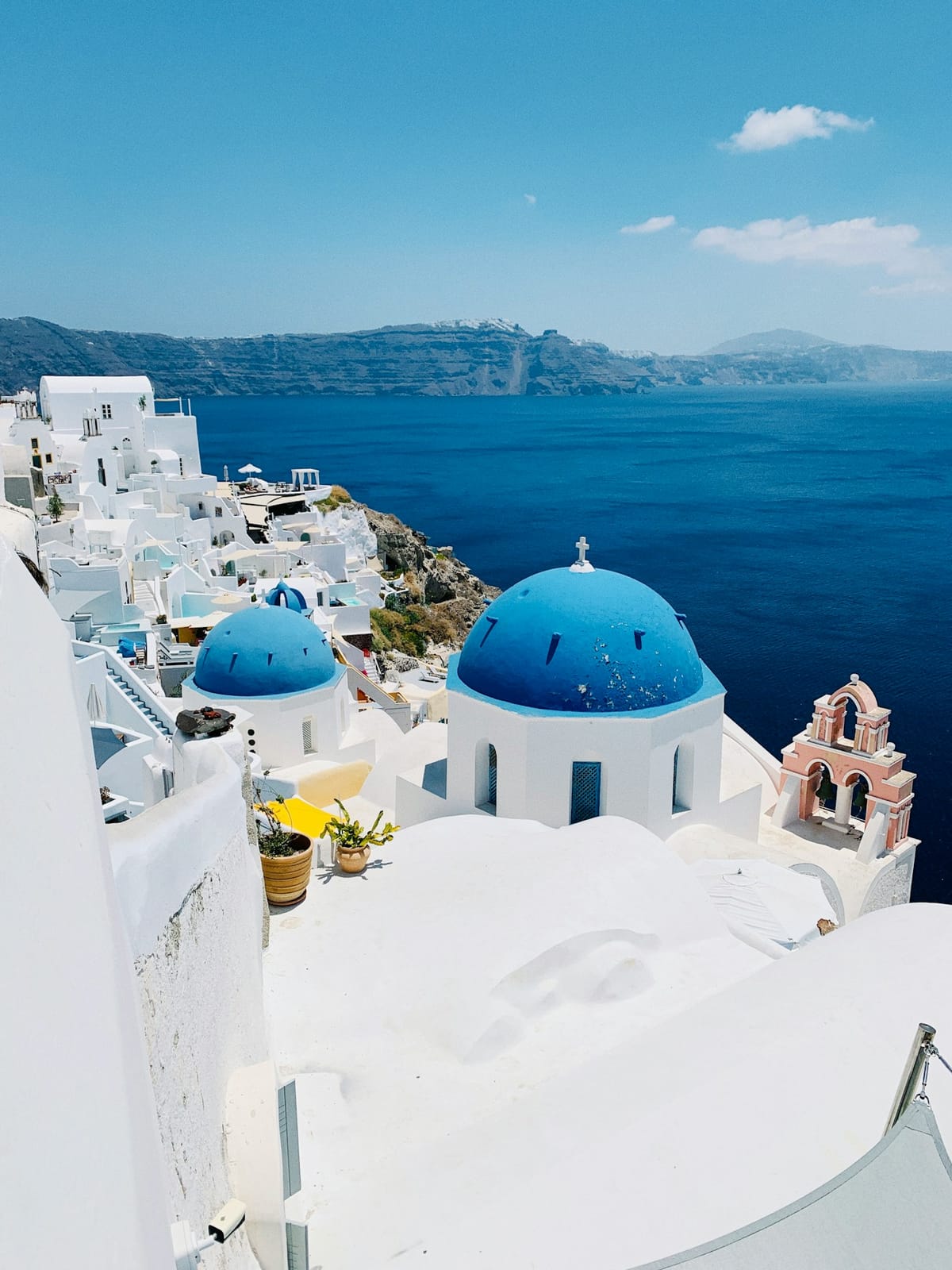
Mykonos is the famous one — the windmills, Little Venice with tables above the sea, the narrow lanes designed to disorient pirates and still doing it. Santorini sits on the rim of a volcanic caldera, the eruption that created it around 1600 BC being the largest in recorded history. The sunsets are real, the caldera views are extraordinary, and the white villages of Oia and Fira are worth every photograph you take.
But the islands are many, and the best one is the one without too many people. Paros is a working island, less touristed than its neighbours. Naxos is large enough to have real towns and villages beyond the port. Delos, technically uninhabited, was the mythological birthplace of Apollo and sits just north of Mykonos — a UNESCO site with some of the finest marble ruins in the Aegean.
Crete — 160 miles long, the largest Greek island — is a different proposition entirely. It has mountains, gorges (the Samariá Gorge is famous for hiking), the Minoan palace at Knossos, and towns like Rethymno with a proper Venetian harbour and no visible concrete. It is less about island postcard beauty and more about depth — history, food, walking, and an island that is its own world.
The ancient sites
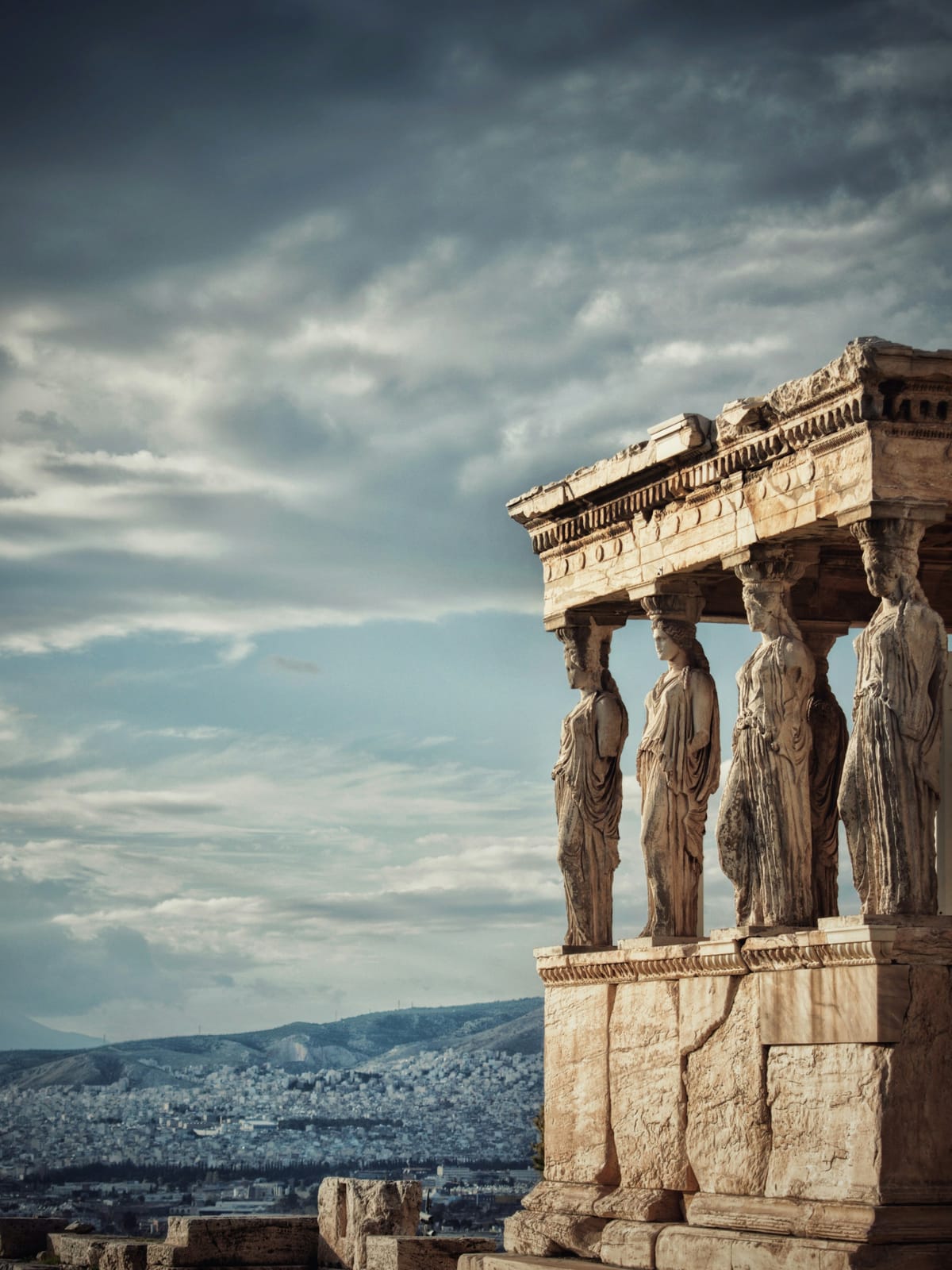
Athens is built on antiquity. The Acropolis — the rock itself, forty-six marble columns of the Parthenon, the subsidiary temples — requires a climb on polished ancient stone, but the first view justifies it. The Acropolis Museum at the base has the original pediment sculptures and friezes in climate-controlled galleries. The Agora, the marketplace where Socrates argued philosophy, is flatter and less crowded. The Theatre of Dionysus, the Odeion of Herodes Atticus, the Byzantine churches of Plaka — a full day of walking will show you layers.
Delphi is a full day from Athens — the oracle sanctuary in the mountains above the Gulf of Corinth, where ancient Greeks came to ask the gods what would happen. The Temple of Apollo, the ancient theatre with a perfect view, the museum with the statue of the Charioteer — you will understand why ancients thought the gods spoke here.
Knossos on Crete was the palace of the Minoan civilization, built four thousand years ago. The labyrinthine rooms, the grand staircase, the light wells, the frescoed walls, and the sophisticated plumbing — all predate the classical Greeks. It is the oldest advanced civilization in Europe, and what survives is still astonishing. The Heraklion Archaeological Museum holds the finest Minoan art in the world: the Snake Goddess figurines, the bull-leaping frescoes, the Phaistos Disc.
How many days in Greece
| Duration | Best for | Rough itinerary |
|---|---|---|
| 5–6 days | First visit, limited time | Athens (2–3 days), one island like Mykonos or Santorini (2–3 days) |
| 7–8 days | Classic island-hopping | Athens (2–3 days), Mykonos (1–2 days), Santorini (2–3 days) |
| 10 days | The complete Greece | Athens (2–3 days), Mykonos (1–2 days), Santorini (2–3 days), Crete (2–3 days) |
| 14+ days | Slow travel, smaller islands | As above plus Paros or Naxos, or add a second week for Delphi, hiking, or a south coast island |
When to visit Greece
April to May is spring — mild temperatures (18–22°C / 64–72°F), the islands awakening, Easter crowds if you pick Easter week itself. June is warm and long-daylit; the sea is swimmable, the islands not yet packed. July and August are the peak — hot (often 32–35°C / 90–95°F), crowded, prices highest. September is many travelers' ideal month: warm, the sea still hot, fewer families after school restart, fewer than August but more than June. October is mild (20–24°C / 68–75°F), the sea still swimmable until mid-month, and the islands are yours. November onwards it cools; the south stays mild and pleasant (15–18°C / 59–64°F), but many island hotels close.
The worst times are Christmas and New Year (crowded, expensive), and the two weeks around Easter (crowded again). The best times are May, June, September, and early October — warm, the islands open, not at peak heat or crowds.
Getting around Greece
Most people fly into Athens. Ferries connect Athens to the islands from the port at Piraeus — two to eight hours to Mykonos and Santorini depending on the boat, longer to Crete. Ferries are reliable and slow enough that you can watch the Aegean roll past. Fast ferries cut the time but are pricier. Flights between islands (Athens to Mykonos, Mykonos to Crete) save a day if you need to move quickly but are less romantic.
Getting around the islands themselves is simple: water taxis, local ferries between nearby islands, rental cars if you want to explore inland. Walking is reliable — the islands are small enough that you can get lost productively. Roads in the mountains can be narrow and winding, but driving is straightforward if you're comfortable with it.
The train system in Greece is minor — the railway north from Athens is useful if you're heading to Thessaloniki, but most travel happens by ferry and car. Buses connect every town, but for a private trip the flexibility of a rental car or a private driver makes sense if you're exploring beyond the obvious ports.
First-timer mistakes in Greece
Don't visit Mykonos in August unless noise and crowds appeal to you — the island is small and hosts tens of thousands in peak month. Don't skip the Acropolis Museum to save an hour — it holds the original sculptures and changes everything. Don't assume ferry schedules are rigid in the off-season or in rough weather — they're not. Don't attempt the entire Samariá Gorge hike (16 kilometres, 5–7 hours) unless you're properly trained — there are easier walks on Crete. Don't ignore the small plates of Greek food (mezze, saganaki, grilled octopus) as appetizers — they are the meal. Don't book a hotel on Santorini without a caldera view; everywhere else on the island feels like everywhere else. Don't visit islands in January and February expecting more than Mediterranean peace and cool weather — many tourist amenities close.
Practical information for visitors
Passport and visas: US and Canadian citizens do not need a visa to visit Greece for up to 90 days. Check current rules with your embassy as requirements change. Greece is part of the Schengen Area, so the 90-day limit applies across multiple Schengen countries. Bring a passport valid for at least six months beyond your travel dates.
Money and cards: The currency is the Euro. ATMs are widespread in every town and island port; credit cards work in hotels and restaurants but small tavernas and street vendors often prefer cash. Tips are not obligatory but rounding up the bill is appreciated. Restaurants do not add gratuity automatically.
Language: Greek is the official language. English is very widely spoken in tourist areas, hotels, and restaurants. In villages and small islands, a translation app and a few Greek words ('kalispéra' for good evening, 'efcharistó' for thank you, 'kalí órexi' before meals) go a long way and are genuinely appreciated.
Health and safety: Greece is very safe for tourists. Petty theft happens in crowded tourist areas (the Acropolis crowds, ferry ports) but violent crime is rare. Tap water is safe to drink. Sunscreen is essential — the Aegean sun is intense. Travel insurance that covers repatriation is wise in case of a serious accident.
How we plan your Greece trip
Because every Black Deer Travel trip is private, we build your Greece itinerary around your pace and interests rather than a fixed route. Prefer the ancient world over beach time? We spend longer in Athens and Delphi, add an archaeologist at Knossos. Want to swim and cook? We add a cooking class in a Mykonian home and boat time from Santorini. Interested in smaller islands without the crowds? We route you through Paros and Naxos instead of Mykonos. You tell us roughly when you can travel and how many days you have — we'll tell you honestly where Greece is at its best that season, reserve your ferries and hotels, and arrange private guides who will meet you at each site. A real human responds to your inquiry within one working day.
Frequently asked questions
What is the best time to visit Greece?
May, June, September, and early October are ideal — warm, the islands fully open, not at peak crowds or heat. September is especially popular for food and wine lovers, as it's the start of the harvest season. July and August are hot and crowded; November to March is cool but many island hotels close.
How many days do you need in Greece?
Seven to ten days is right for a complete first trip: three days in Athens for the Acropolis and museums, and four to seven days island-hopping (Mykonos, Santorini, possibly Crete). Five days works if you have limited time — Athens plus one major island. Two weeks lets you add smaller islands, Delphi, or a second week exploring Crete.
Which Greek islands should I visit?
Mykonos and Santorini are the most famous and worth seeing, but expect crowds. Paros and Naxos are less touristed and just as beautiful. Delos is extraordinary for history but uninhabited. Crete is an entire island unto itself — not primarily a beach destination but the heart of ancient Minoan civilization. The choice depends on whether you prefer postcard islands or depth.
Is it possible to visit Greece in winter?
Yes. December to February is mild (60–65°F / 15–18°C) and peaceful, especially in the south and on Crete. However, many island hotels, restaurants, and ferries close from November to March. Athens and the southern mainland stay largely open. It's an excellent time for ancient sites and city exploring with virtually no crowds.
Do I need a visa to visit Greece?
US and Canadian citizens do not need a visa for up to 90 days. Greece is part of the Schengen Area, so the 90-day limit applies across multiple Schengen countries. Check your embassy's current requirements; your passport should be valid for at least six months beyond your planned travel.
How do I get between Greek islands?
Ferries are the main link — regular boats run from Athens (Piraeus port) to Mykonos, Santorini, and other islands, taking 2–10 hours depending on destination. Flights between islands are faster but pricier. Many visitors take a ferry once (the Aegean is beautiful from the deck) and fly the return. Water taxis connect nearby islands and smaller ports.
 Quick cookie chat