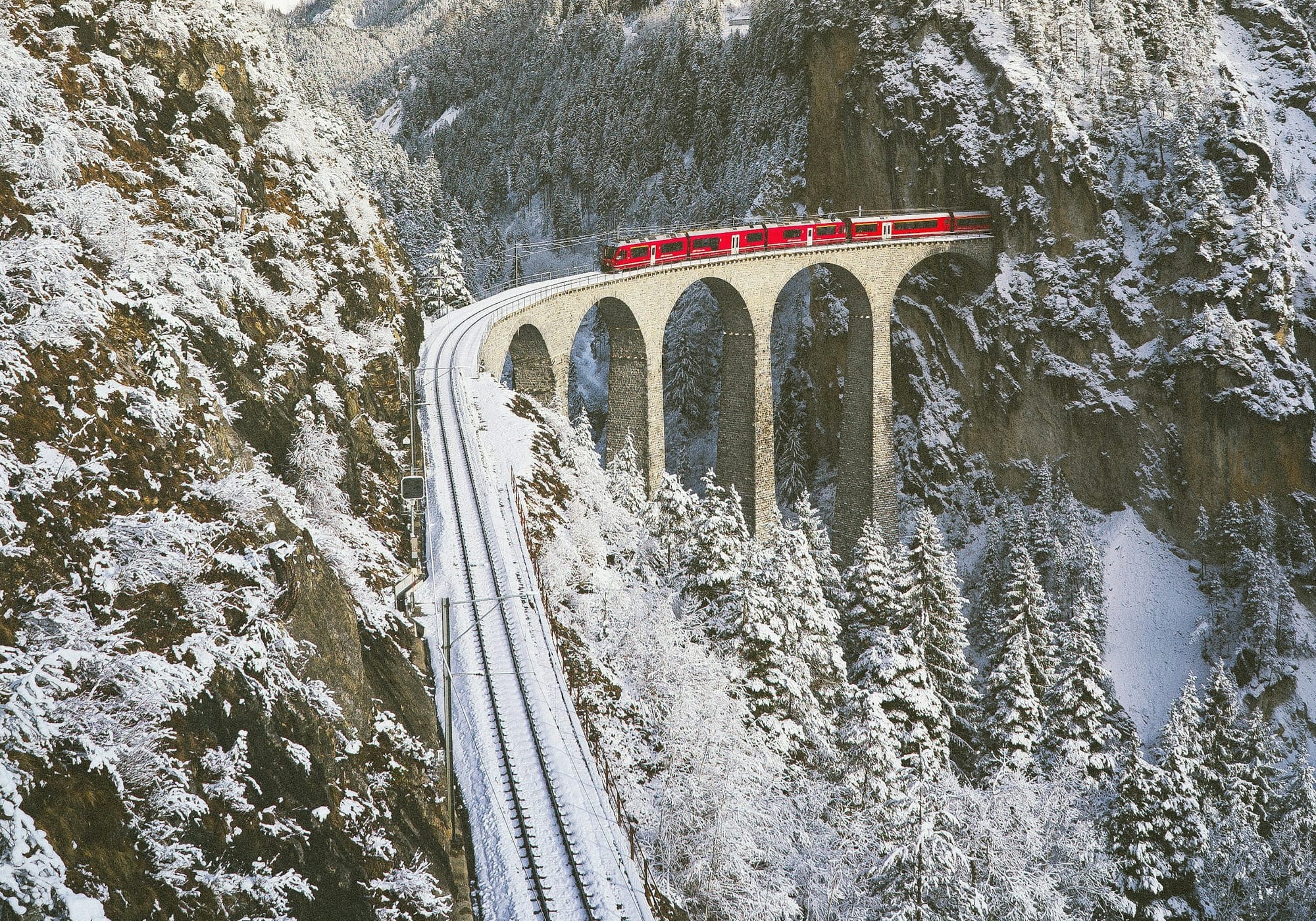
The route at a glance
This 10 day Switzerland itinerary is one loop by train: Zurich, Lucerne, Bern, the Bernese Oberland, Zermatt and Lake Geneva. Fly into Zurich and out of Geneva, so you travel in one direction and never pack twice. Five train journeys carry you between bases, and none takes longer than about four hours.
Ten days is enough for six places and two high-mountain days, plus a day trip to the Rhine Falls. It is not enough to see the whole country, and we don't try. Compared with our 7 day Switzerland itinerary, this route adds Bern and the Rhine Falls and gives the mountains an extra day. For the country as a whole, see our Switzerland page.
Your 10 day Switzerland itinerary, day by day
| Day | Base | What you do |
|---|---|---|
| 1 | Zurich | Arrive at Zurich Airport, about 10 minutes by train to the centre, then the Altstadt and the lake at dusk |
| 2 | Zurich | Day trip to the Rhine Falls (about 45 minutes by train), back to the Niederdorf for dinner |
| 3 | Lucerne | Train to Lucerne (about 50 minutes), Chapel Bridge, Musegg walls, Lion Monument |
| 4 | Bern | Train to Bern (about an hour), the Lauben arcades, the Einstein House, the Minster tower |
| 5 | Grindelwald | Train via Interlaken to Grindelwald (about 2 hours), first views of the Eiger |
| 6 | Grindelwald | Jungfraujoch early, Aletsch Glacier from 3,454 metres, valley walk in the afternoon |
| 7 | Zermatt | Train south via Spiez and Visp (about 3.5 hours) to car-free Zermatt |
| 8 | Zermatt | Gornergrat railway to 3,089 metres, Matterhorn views, evening in the village |
| 9 | Geneva | Train along Lake Geneva (just under 4 hours), Old Town and the Jet d'Eau |
| 10 | Geneva | Optional morning in Lavaux by train, then transfer to Geneva Airport (about 10 minutes) |
Zurich and the Rhine Falls: two nights
Zurich is the easy start. The airport is about 10 minutes from the main station by train, and the old town sits on both banks of the Limmat, a short walk from the lake. Spend the first afternoon in the Altstadt lanes and let the flight wear off. The Fraumünster holds five stained-glass windows by Marc Chagall, and the Kunsthaus has one of the strongest art collections in Switzerland.
Give day two to the Rhine Falls. The train takes about 45 minutes to Neuhausen am Rheinfall, and a short walk brings you to the viewing platforms. In season, a small boat runs out to the rock in the middle of the falls, and the spray reaches you before you reach the rock. Back in Zurich, eat late in the Niederdorf, the old city's restaurant quarter, and walk home along the water.
Lucerne and Bern: one night each
Lucerne is about 50 minutes from Zurich by train. The Chapel Bridge, a covered wooden footbridge first built in 1333, crosses the Reuss where it leaves the lake. Much of it was rebuilt after a fire in 1993. Walk the Musegg wall, whose towers you can climb, then see the Lion Monument, a sandstone carving of a dying lion cut into a rock face in 1820 for the Swiss Guards who died in Paris in 1792.
Bern is about an hour from Lucerne by train. It is the federal capital, and it is quieter than you expect. The old town sits on a bend of the Aare river, and its Lauben, the arcades, run for about six kilometres, so you can walk the centre in the rain without getting wet. Climb the Minster tower, about 100 metres high, for the river and the Alps. The Einstein House on Kramgasse is where Albert Einstein lived while he worked as a patent clerk in the city. Our Best of Switzerland tour also spends a night in Bern.
Grindelwald and the Jungfraujoch: two nights
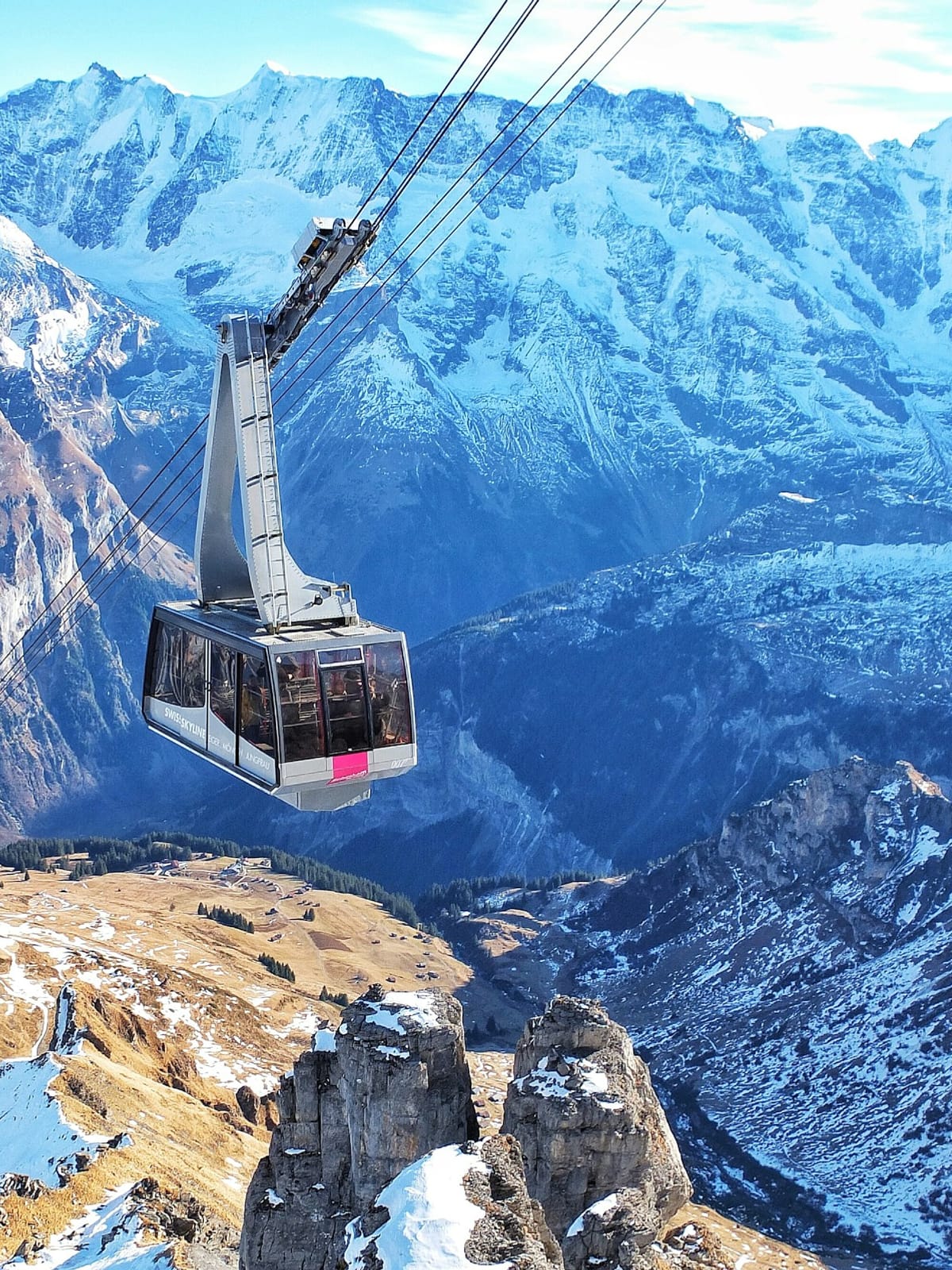
Bern to Grindelwald takes about two hours, with a change at Interlaken. Interlaken sits between two lakes, and the valley narrows toward the north face of the Eiger. Grindelwald has direct views of that face. Wengen, reached by cogwheel train from Lauterbrunnen, is the car-free alternative on its own terrace above the valley.
Day six is the Jungfraujoch. The railway climbs inside the mountain, through a tunnel bored into the Eiger and the Mönch, and reaches 3,454 metres. It is the highest railway station in Europe, and it opened in 1912. From the top you look across the Aletsch Glacier, the longest in the Alps. Allow about 45 minutes each way from Grindelwald on the Eiger Express, or about 1.5 hours on the older cogwheel route, and go early, because cloud often builds by midday. Bring a warm layer, even in July.
Zermatt: two nights
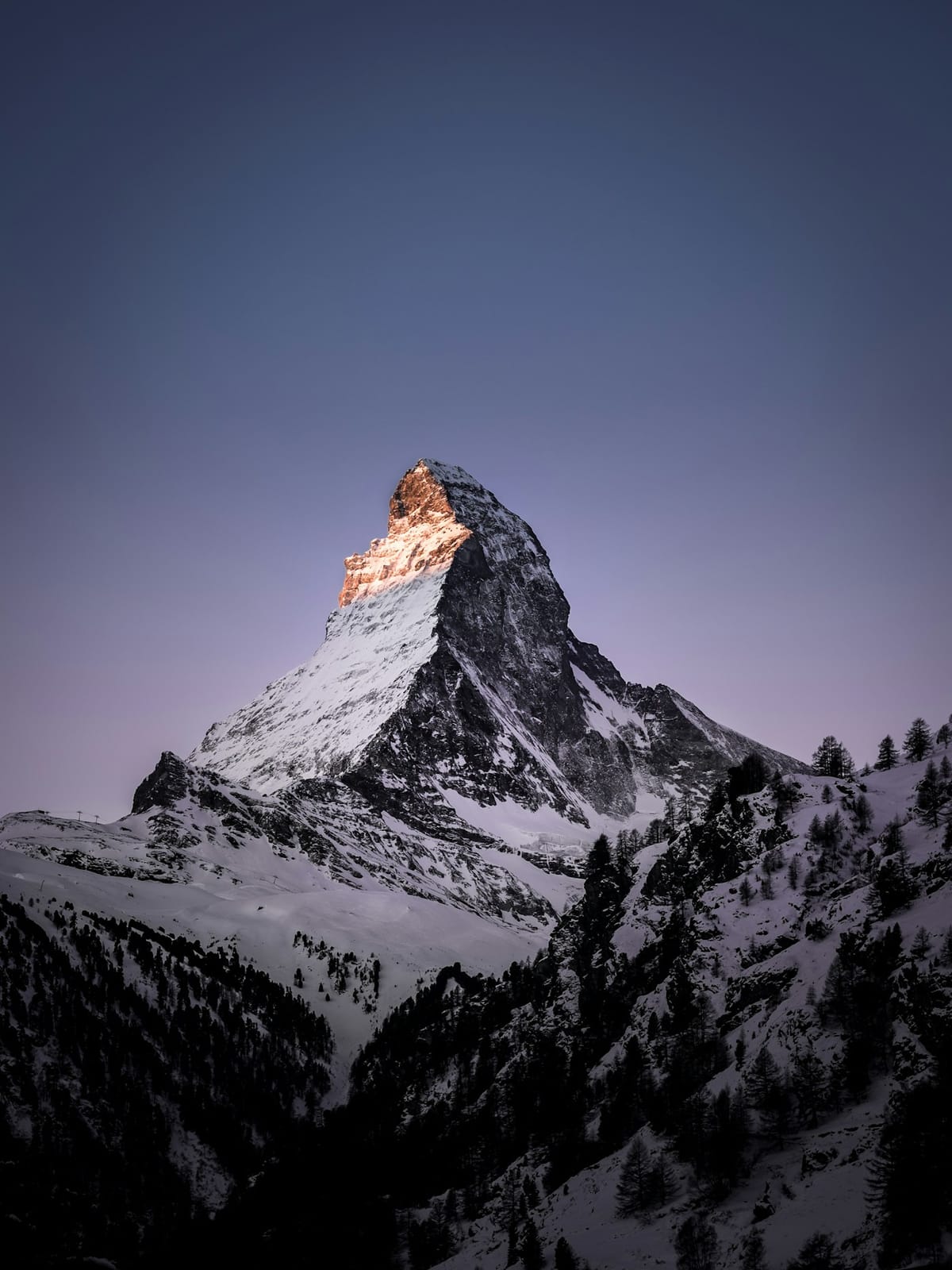
The move from Grindelwald to Zermatt is the longest rail day of the trip, about 3.5 hours with changes at Spiez and Visp. Cars stop at Täsch, and a shuttle train covers the last stretch. Zermatt has been car-free since 1931. Electric taxis and small buses move luggage through the streets, so you walk. The Matterhorn rises above the village, but cloud hides it often, so don't plan your whole stay around one view.
Day eight is the Gornergrat railway, which has run since 1898 and climbs to 3,089 metres. Go up in the morning, when the air is clearest, and come down for lunch in the village. The Matterhorn often catches the last light at dusk, so stay out for it. For a higher summit, our Essence of Switzerland tour includes the Matterhorn Glacier Paradise cable car.
Geneva and Lavaux: the last two days
Zermatt to Geneva is just under 4 hours by train, with a change at Visp and a ride along the lake. Geneva is French-speaking and international. The Red Cross was founded here in 1863, and many United Nations bodies have offices in the city. The Jet d'Eau throws water about 140 metres above the lake. Climb to the Old Town for the cathedral of St Pierre and the Reformation Wall.
Day ten is yours. The optional morning is Lavaux, about an hour by train along the lake to terraced vineyards that climb steep slopes above the water. Taste Chasselas, the local white, at a table by the lake. Geneva Airport is about 10 minutes from the main station, so there is time for one more coffee on the way.
Where to stay
Zurich: the old town or the lakefront, so both evenings are easy on foot. Lucerne: the old town, ideally with a view of the lake. Bern: the old town near the Lauben, with the river a few minutes away. Grindelwald for the Jungfraujoch and the Eiger view, or Wengen if you want a car-free village on a terrace. Zermatt: the village centre, close to the station, where an electric vehicle carries your luggage the last stretch. Geneva: near the lake or the Old Town. We recommend specific hotels once we know your dates.
When to go
Late June to September gives the most reliable run of mountain railways and the longest days. This route depends on the Jungfraujoch and Gornergrat both running, so the summer window suits it best. September is often the sweet spot, with clear air, fewer visitors and the first colour on the lower slopes. July and August are the busiest and the dearest.
Late May and early October can work, but check that the railways and some hotels are open, since several close between seasons. In winter both mountain railways still run, and Zermatt is a ski resort. The route still works, but plan shorter days and book the mountain tickets for the morning. For a broader look at the country and its seasons, read Visit Switzerland.
Ways to change the route
Short on time? Skip Bern and Lucerne and put the spare nights into Grindelwald and Zermatt. You keep both mountain days and lose two rail moves. Want more? The Glacier Express runs from Zermatt to St. Moritz in about eight hours, and our Swiss Alps tour builds it in. For the full circuit, with Basel, the Engadin and Ticino, see the Grand Tour of Switzerland.
Not keen on heights? Replace the Jungfraujoch with a full day on Lake Thun or Lake Brienz. Interlaken sits between the two lakes, so a boat day is easy to reach, and the lakeshore villages are a slow way to spend an afternoon.
Want the south too? Ticino, around Lugano and Locarno, has palm trees and Italian food, and it feels like a different country. It needs more days than this route has. Our Best of Switzerland tour covers it.
How we plan it
We book the trains, the mountain tickets and the luggage moves, so you don't handle them on the day. We move the Jungfraujoch to the clearest morning we can find, and we leave the Gornergrat day flexible. We're a small team, so we take fewer trips and answer them ourselves. One planner stays your contact from the first email to the flight home.
Frequently asked questions
Is 10 days enough for Switzerland?
Yes, for a first trip with six stops and two mountain days. Ten days covers Zurich, Lucerne, Bern, the Jungfrau region, Zermatt and Geneva. It is not enough to add Ticino, the Engadine or the Glacier Express as well. For those, plan two weeks or more.
Is the Swiss Travel Pass worth it for 10 days?
It depends on your dates. The pass covers most trains on this route, plus boats and buses, and gives discounts on many mountain railways. This route has only five main rail days, so the pass pays off mainly if you add extra trips. Compare the pass price for your dates with single tickets and mountain fares before you buy.
Do I need a car for a 10 day Switzerland itinerary?
No. Trains link every base on this route, and Zermatt and Wengen are car-free. A private driver is useful for luggage or a single transfer, but you don't need one to get around.
How long are the train journeys?
Five days include a main train move, from about 50 minutes (Zurich to Lucerne) to just under 4 hours (Zermatt to Geneva). The other days are spent on foot, on mountain railways or on the lake.
What is the best month for a 10 day Switzerland itinerary?
September is the best balance: clear air, open mountain railways and fewer people than July and August. June works well too, with long days and green meadows.
Is the Jungfraujoch worth it if the weather is poor?
Go up on the clearest morning you can get. If low cloud covers the top, a day at the Gornergrat or a walk in the valley makes better use of the day.
 Quick cookie chat