The short answer
Switzerland is four countries in one — not just in language (German, French, Italian, Romansh) but in culture and temperament. Zurich is Germanic and direct. Bern is the quiet federal capital with six kilometres of covered medieval arcades. Lucerne is a postcard lakeside city with medieval towers and Renaissance architecture. Geneva is French-speaking and cosmopolitan, the most international small city in the world. And Ticino, south of the Alps, is a different country entirely: palm trees, the Lago Maggiore, food that belongs more to Milan than Zurich.
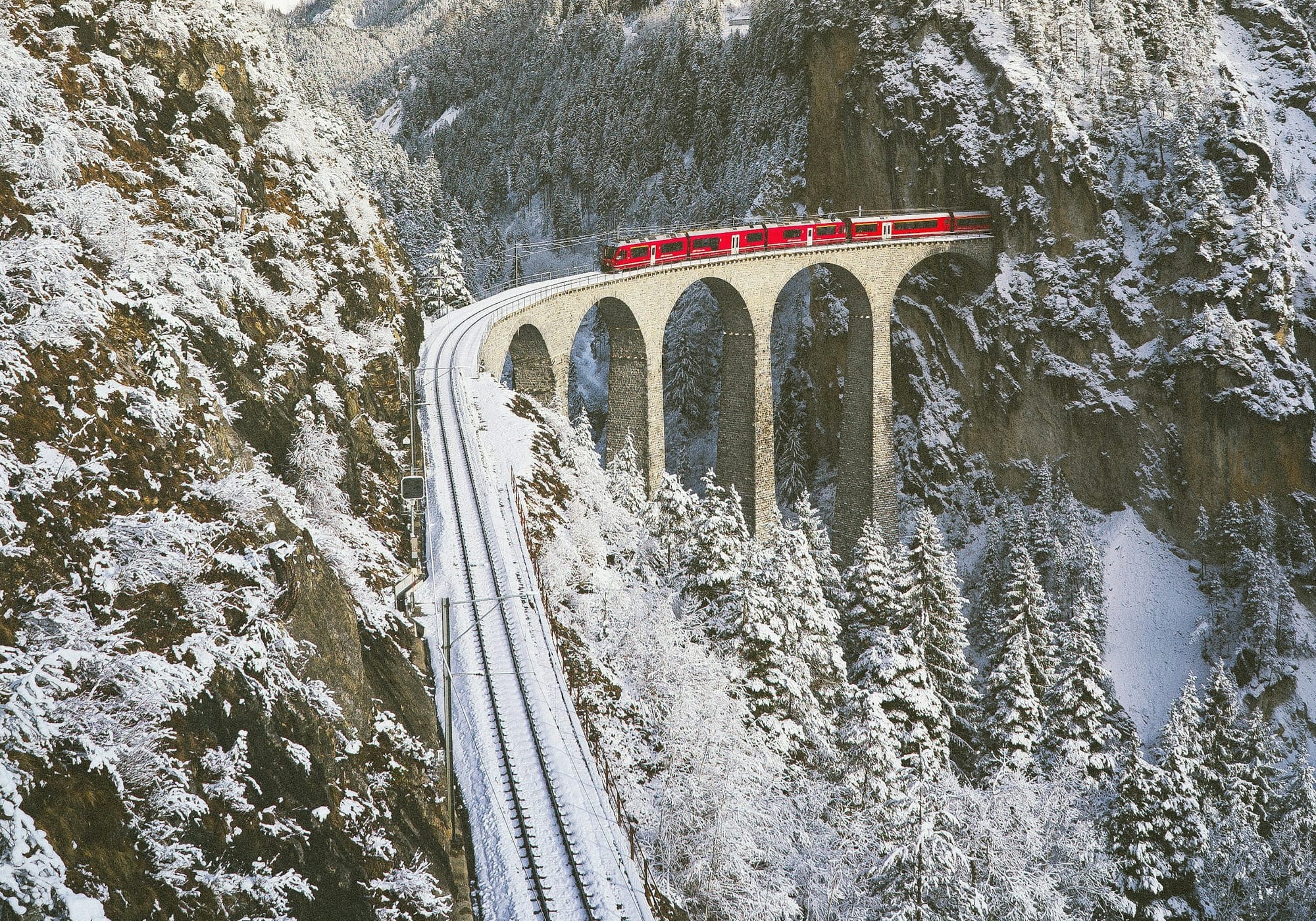
The mountains are the real star: the Jungfraujoch railway climbs to 3,454 metres through a tunnel bored into the Eiger. Zermatt is the car-free village below the Matterhorn. The Aletsch Glacier is the longest in the Alps. The Swiss train system is the finest in Europe — punctual, scenic, integrated with cable cars and mountain railways so that a day's itinerary might involve four different modes of transport.
Why Switzerland: What you're really visiting
Switzerland is small — twelve by twenty kilometres would contain much of what a visitor wants — but impossibly complex in its cultural layers. The country is a federal republic of 26 cantons, each with its own history, language, and temperament. German-speaking cantons (Zurich, Bern, Basel) are efficient and prosperous. French cantons (Geneva, Lausanne, the Jura) are elegant and liberal. The Italian canton (Ticino) moves more slowly and lives by different rhythms. This isn't casual travel brochure stuff — it's real and shaped every foreign policy decision.
The mountains were barriers for centuries; now they're the reason people come. The Bernese Oberland (the valley containing Grindelwald, Wengen, the Jungfraujoch) is the highest concentration of dramatic scenery in the Alps. The Matterhorn rises above Zermatt — the pyramid shape, the snowfields, the climbers visible from town — like nowhere else. In summer, wildflower meadows cover the high pastures. In winter, it's the opposite extreme: deep snow, avalanches, skiing, silence.
The food and drink reward slowness. Fondue and raclette are not touristy — they're serious mountain food. Swiss chocolate is Swiss for a reason. The wines of the Lake Geneva shore (Chasselas) and the Valais (Petite Arvine, Humagne) are terroir-driven and beautiful. Coffee is excellent. The punctuality and efficiency extend to food too: everything is clean, fresh, and without pretense.
The German-speaking cities
Zurich is efficient and modern — a financial centre, a tech hub, almost painfully organized. But it rewards wandering. The Altstadt on the west bank of the Limmat has medieval streets and guild houses with painted facades (Zunfthäuser). The Kunsthaus has one of the world's best collections of modern art (Munch, Picasso, Giacometti). The Fraumünster has Marc Chagall's stained glass windows, five colours in the apse glass. The Bahnhofstrasse is the world's most expensive shopping street per square metre. Most visitors spend a night and move on, but a second day reveals a city that takes itself seriously without pretension.
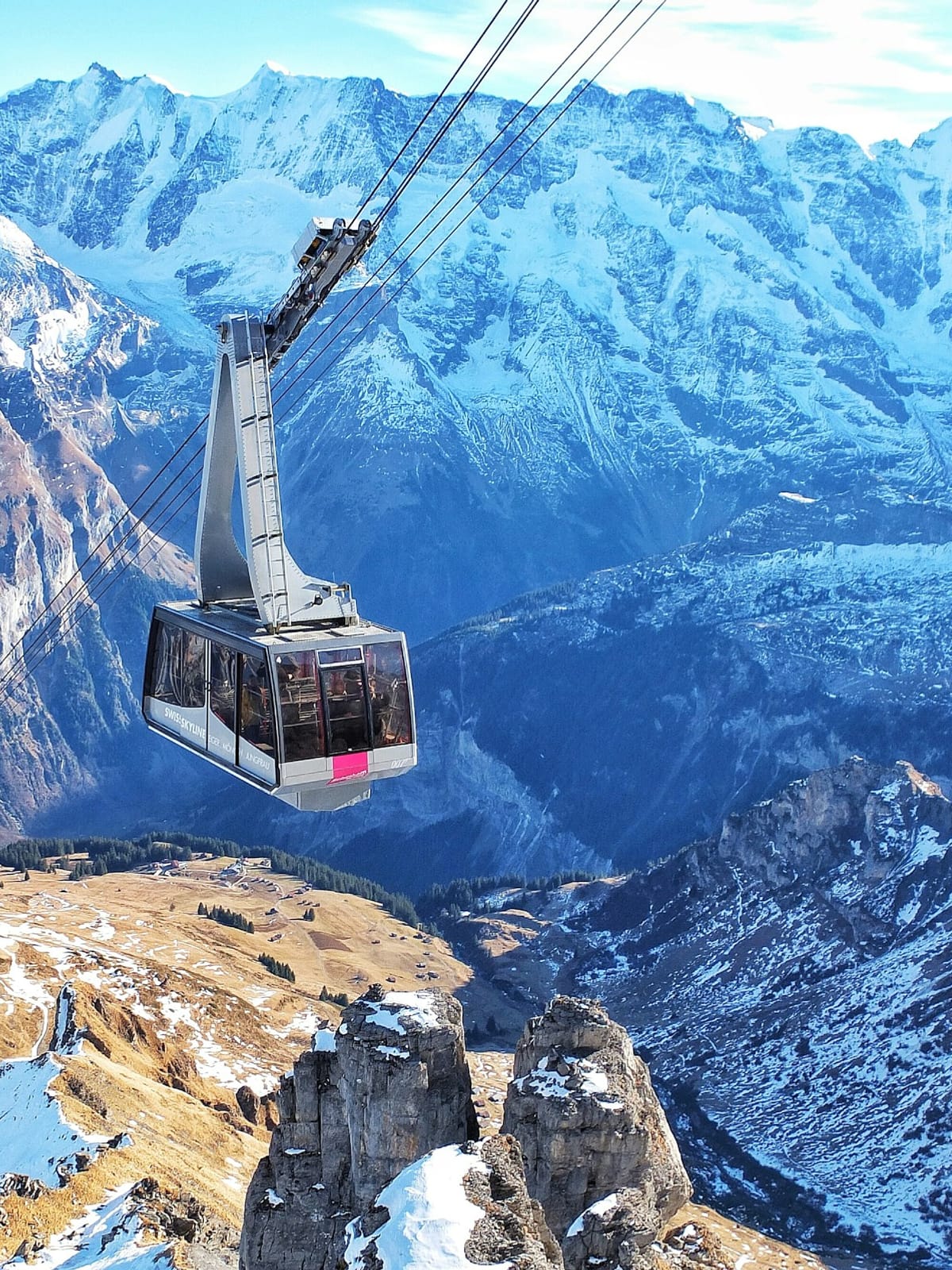
Lucerne sits on the Vierwaldstättersee (Lake Lucerne), one of the most beautiful lakes in Switzerland. The Kapellbrücke — the Chapel Bridge, built in 1333, the oldest covered wooden bridge in Europe — crosses the Reuss at the point where it flows out of the lake. Its octagonal Water Tower has stood since the 1200s. Walk the old town: the Musegg city wall with nine medieval towers still standing on the ridge above town. The Lion Monument is Thorvaldsen's 1820 sandstone carving of a dying lion — Mark Twain called it the most mournful and moving piece of stone in the world. Mount Pilatus above the city, reachable by cable car, gives the most dramatic single view of the lake and the city below.
Bern, the federal capital, is the least presumptuous capital in Europe. The Altstadt occupies a peninsula in a bend of the Aare River. The defining characteristic is the Lauben — six kilometres of arcaded walkways beneath the buildings, allowing you to walk the entire city centre in the rain without getting wet. The Federal Palace (Bundeshaus) on Bundesplatz is where Parliament meets; it's one of the few grand gestures in a city that generally avoids them. The Bern Minster's 100-metre tower is the tallest church spire in Switzerland and offers the best city views. The Einstein Museum is in the house where Albert Einstein developed special relativity in 1905 while working as a patent examiner two streets away. The Rosen Garden above the Aare gives the view of the old city with the Bernese Oberland peaks to the south — on a clear day, Europe's highest peaks are visible.
The mountains and high passes
The Jungfraujoch railway is the centrepiece of the Bernese Oberland. The train departs from Grindelwald or Wengen, climbs through forest and meadow, then enters a tunnel bored into the Eiger (the 'Ogre') — one of the Alps' most notorious mountains. It emerges above the clouds at 3,454 metres, on the Aletsch Plateau, with the longest glacier in the Alps stretching beneath you. The Sphinx Observatory sits at the top. The Air is thin; the light is extraordinary. A day here is an education in altitude and geology.
Zermatt is a car-free village above the Matter Valley, completely surrounded by fourteeners (mountains over 4,000 metres). The Matterhorn rises above town — the pyramid shape, the black gneiss rock, the eternally-present snow — like nowhere else. The Gornergrat railway climbs to 3,089 metres with views of twenty-nine peaks over 4,000 metres. Hiking from Zermatt (from gentle lakeside trails to demanding alpine crossings) is the centre of the experience here. In winter, it's skiing and silence.
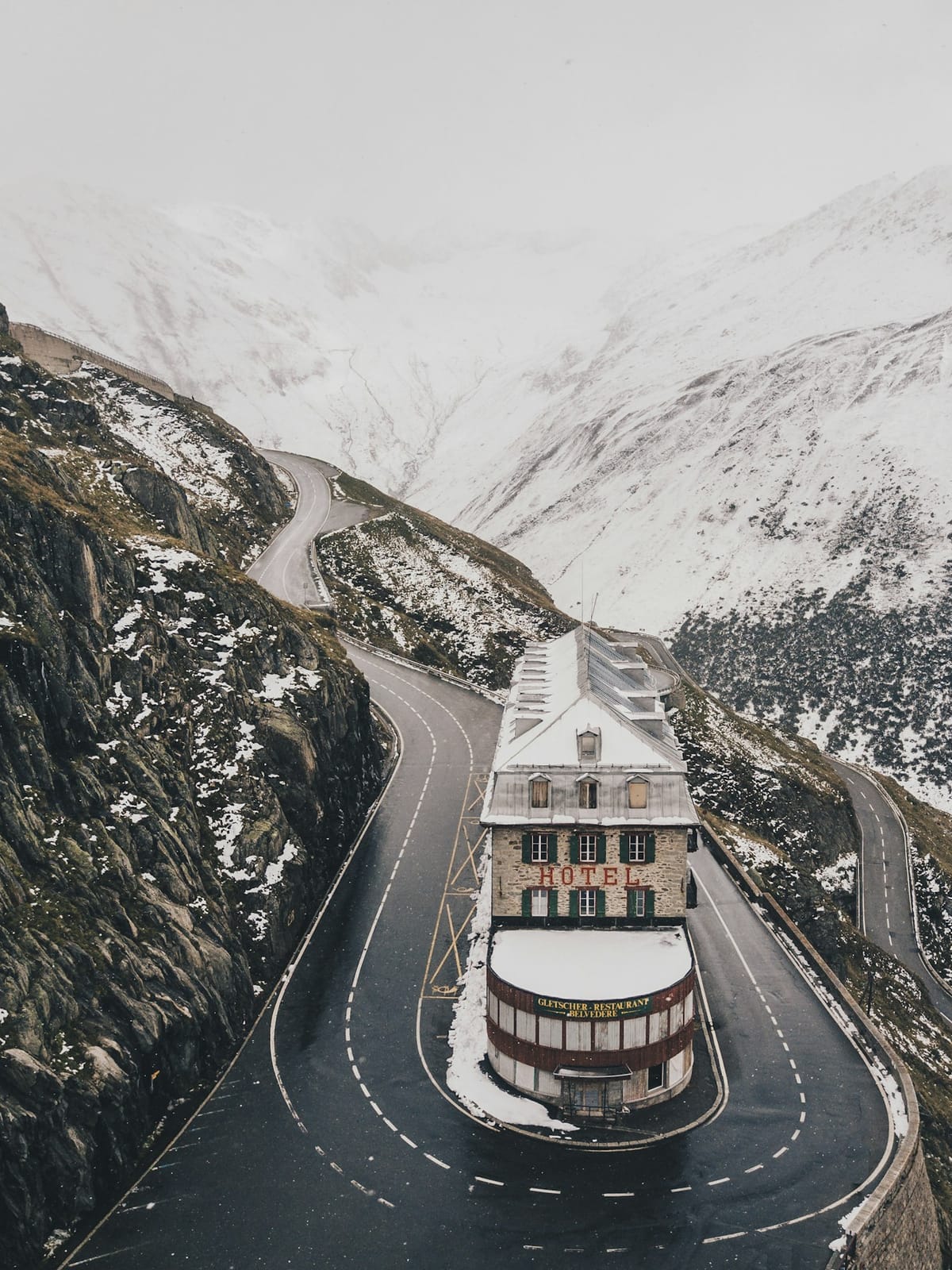
The Gotthard Pass, once the key route north–south through the Alps, is still driven by some travelers, but the train through the Gotthard Base Tunnel (the world's longest, 57 kilometres) under the Alps has made the pass less necessary. The Glacier Express train connects Zermatt to St. Moritz through the mountains — acknowledged as the world's slowest express, because every view demands the train to pause.
Ticino and the south
Ticino, the Italian-speaking canton south of the Alps, is a different country. Palm trees grow here. The weather is Mediterranean — warm and sunny, even when the north is grey. Locarno and Ascona on the Lago Maggiore (the lake that borders Italy) have a lakeside elegance, piazzas with cafes and families, food that looks more at Milan than Zurich. The architecture is Lombardian — arcaded porticoes, bell towers, stucco on stone. The pace is noticeably slower. A day in Ticino convinces you that Switzerland contains multitudes.
The lake itself — the Verbano to Italians — touches Italy and is the warmest lake in Switzerland. Palm trees, subtropical gardens, and the light bouncing off the water make it feel like a different season entirely. Hiking in the foothills, exploring the valleys, sitting by the water — the pace here is Mediterranean, not Swiss-efficient.
Geneva and the French west
Geneva is the most international small city in the world — the UN, the Red Cross, the League of Nations (now the UN building), the World Health Organization, and dozens of other organizations make it a capital of diplomacy. The city is also cosmopolitan: immigrants and native French-speakers giving it a blend most Swiss cities don't have. Lake Geneva (Lac Léman to French speakers) is beautiful; the Jet d'Eau (the famous fountain, 140 metres high) is the symbol. The Altstadt is compact and walkable. The museums are numerous and excellent. The restaurants and cafes are good and relaxed without pretension.
The lake shore west of Geneva (toward Lausanne and Vevey) is the Lavaux region — terraced vineyards on steep slopes, ancient villages, and Chasselas wine that is the standard of freshness and terroir. A day here is wine, food, and the light on the lake.
How many days in Switzerland
| Duration | Best for | Rough itinerary |
|---|---|---|
| 5–6 days | Classic mountains + cities | Zurich, Lucerne, Jungfraujoch day trip, return to Zurich or Geneva |
| 7–8 days | The complete landscape | Zurich, Lucerne, Bernese Oberland (2 days), Zermatt (1–2 days), Geneva |
| 9–10 days | Slow travel, multiple bases | Zurich (1), Lucerne (1–2), Grindelwald (2), Zermatt (2), Ticino (1–2), Geneva (1) |
| 12–14 days | Mountains, lakes, all four languages | As above plus the Gotthard region, the Jura mountains, extended time in Ticino or the French lakes |
When to visit Switzerland
June through September is summer — warm (18–26°C / 64–79°F), all mountain passes and railways open, wildflower meadows in the high country. July and August are warmest and most crowded. May and June are green and fresh, fewer crowds. September is often the best month: warm, clear light, the first signs of autumn colour, far fewer tourists than summer.
December through March is winter — cold (0–8°C / 32–46°F in the valleys, well below freezing in the mountains), deep snow in the high country, excellent skiing. The Christmas and New Year period is busy; January and February are quieter but still get good snow. Spring (April–May) and autumn (September–October) are mild and excellent for city visiting, wine touring, and hiking.
The worst time is late October through November: unpredictable weather, some passes closing, many restaurants and attractions reducing hours. The best times are June, September, and October for general traveling; July–August for mountain activities; December–March for skiing and winter sports.
Getting around Switzerland
The Swiss train system is the finest in Europe — punctual, connected, and integrated with mountain railways and cable cars. A day's itinerary might involve three or four different modes of transport (train, cable car, smaller mountain railway, gondola) and they connect seamlessly. The Swiss travel pass is economical if you're making several train journeys; individual journeys are expensive but reliable.
Renting a car is unnecessary in the towns and between major cities — the trains are faster and more relaxing. Mountain passes are dramatic but narrow; driving them is negotiable but not ideal. Private drivers are available and eliminate the need to navigate.
Within cities, walking is the primary mode. Zurich, Lucerne, Bern, and Geneva are all walkable and compact. Public transit (trams, buses) is excellent if you need it. Biking is common and feasible on flat terrain and valleys, but not in the mountains.
First-timer mistakes in Switzerland
Don't skip Bern thinking it's just a federal capital — the Altstadt and the Aare views are worth a full day. Don't visit the Jungfraujoch on a cloudy day if you can help it — the views are the point. Don't assume the Matterhorn is visible from Zermatt every day — clouds cover it regularly; patience is rewarded. Don't try to do too much in too few days; Switzerland is small but movements take time because of the mountains and the deliberate pace of the train system. Don't skip Ticino thinking it's not 'real Switzerland' — it's exactly as real as the north and offers a completely different perspective.
Practical information for visitors
Passport and visas: US and Canadian citizens do not need a visa to visit Switzerland for up to 90 days. Switzerland is not part of the EU, but it is in the Schengen Area, so the 90-day limit applies across Schengen countries. Bring your passport; you may be asked for it. Check current requirements with your embassy.
Money and cards: The currency is the Swiss Franc (CHF). Switzerland is expensive — expect to pay 20–30% more for the same services as in neighbouring countries. ATMs are abundant; credit cards work widely. Tips are not obligatory (service is included) but rounding up the bill is appreciated.
Language: German is spoken in Zurich, Lucerne, and Bern. French is spoken in Geneva. Italian is spoken in Ticino. English is very widely spoken in hotels, restaurants, and tourist areas. Attempting a few words in the local language is appreciated.
Health and safety: Switzerland is very safe. Tap water is safe and excellent. Sunscreen is essential at altitude — the UV exposure increases 10% for every 1,000 metres of elevation. Travel insurance is wise if you plan mountain activities. The health system is excellent if you need care.
How we plan your Switzerland trip
Because every Black Deer Travel trip is private, we build your Switzerland itinerary around your interests and energy. Prefer cities and culture? We extend Zurich, Lucerne, and Bern, add museum visits and café culture. Want mountain experiences? We base you in Grindelwald for the Jungfraujoch and surrounding hiking, and Zermatt for the Matterhorn. Interested in wine and food? We add time in Ticino and the Lavaux wine region, arrange tastings with winemakers. You tell us when you can travel and how many days you have — we'll suggest the best pace, book your train journeys and accommodations in advance, and arrange private guides at each major site. We handle the complex logistics (mountain trains, cable cars, lake ferries) so you simply arrive and experience. A real human responds to your inquiry within one working day.
Frequently asked questions
What is the best time to visit Switzerland?
June, September, and October are ideal — warm, clear skies, all mountain passes open, fewer crowds than July–August. July and August are warmest but crowded and pricier. December–March is excellent for skiing and winter sports, with cold weather and deep snow. April and May are mild but unpredictable. Avoid late October and November.
How many days do you need in Switzerland?
Seven to nine days is ideal for a complete first trip: two days in Zurich or Lucerne, two or three in the Bernese Oberland (Jungfraujoch day trip included), two in Zermatt, and one or two in Geneva or Ticino. Five days works if you focus on one region (e.g., just the Bernese Oberland) plus a city. Two weeks lets you add ski resorts, explore multiple valleys, or move much more slowly.
Is Switzerland very expensive?
Yes — expect to pay 20–30% more for meals, hotels, and activities than in neighbouring countries. However, trains, cable cars, and mountain railways are well-priced for what they offer. Wine, food, and accommodation vary by region; Ticino is less expensive than Zurich or Geneva. Private tours include guides and transfers, which control costs.
Do I need to learn Swiss German to get around?
No. English is widely spoken in hotels, restaurants, and tourist areas. Standard German is understood in German-speaking cantons; French in French-speaking areas; Italian in Ticino. Attempting a few words in the local language is appreciated but not necessary.
Can I see the Matterhorn from Zermatt every day?
No. The Matterhorn is often cloud-covered, especially in early morning and after bad weather. The best views are usually late afternoon on clear days. Weather is unpredictable in the mountains. Building flexibility and patience into your itinerary is wise — and the light, clouds, and changing views are often more interesting than a perfectly clear day.
What train passes are worth buying?
The Swiss Travel Pass gives unlimited rail travel across the entire network and is economical if you're making several long journeys. Regional passes (e.g., Bern region, Valais) are cheaper if you're staying in one area. Individual tickets are expensive but precise — book them when you know your exact itinerary. We recommend what makes sense for your planned movements.
 Quick cookie chat