The route at a glance
Fly into Zurich, fly home from Geneva. In between: Zurich (1 night) → Lucerne (1 night) → Grindelwald or Wengen in the Jungfrau region (2 nights) → Zermatt (2 nights), with a final day in Geneva before the flight. This 7 day Switzerland itinerary crosses the country from north-east to south-west in one direction, so you never double back. Switzerland is small and the trains are fast, but the mountain days are long. Seven days is enough for two high-altitude excursions and three lake-and-city stops, not for the whole country. Ticino, the Engadine and the Glacier Express are for a second trip.
Day-by-day overview
| Day | Base | What you do |
|---|---|---|
| 1 | Zurich | Arrive at Zurich Airport (about 10 minutes to the centre by train), Altstadt and lake promenade |
| 2 | Lucerne | Train to Lucerne (about 50 minutes), Chapel Bridge, Musegg walls, Lion Monument, optional Pilatus or Rigi |
| 3 | Grindelwald / Wengen | Scenic train or drive to the Bernese Oberland (about 2 hours), Interlaken and first views of the Eiger |
| 4 | Grindelwald / Wengen | Jungfraujoch by rack railway, Aletsch Glacier from 3,454 metres |
| 5 | Zermatt | Train south via Spiez and Visp (about 3.5 hours), shuttle train from Täsch, Matterhorn Museum |
| 6 | Zermatt | Gornergrat railway to 3,089 metres, glacier views, evening in the village |
| 7 | Geneva | Train to Geneva (about 4 hours), Old Town and the lake, then the airport |
Zurich: one night
Zurich is the easy start. The airport is a 10-minute train ride from the main station, and the old town sits on both banks of the Limmat river, a short walk from the lake. Spend the afternoon on the Altstadt lanes and the lakeside promenade. The Fraumünster church holds five stained-glass windows by Marc Chagall, and the Kunsthaus has one of the best art collections in the country.
Zurich is also the right place to recover from the flight. Nothing on day one needs an early start, and the city is flat and walkable.
Lucerne: one night
Lucerne is about 50 minutes from Zurich by train. The Chapel Bridge, a covered wooden footbridge first built in 1333, crosses the Reuss river beside the lake. (Much of it was rebuilt after a fire in 1993, which most guides mention and few visitors notice.) Walk the Musegg wall, whose towers you can climb, and see the Lion Monument, a rock-face carving from 1820 for the Swiss Guards killed in Paris.
If the weather is clear, add a mountain. Pilatus is reached by the steepest cogwheel railway in the world, and Rigi by a gentler one. Pick one, not both. On a cloudy day, the Swiss Museum of Transport is a good indoor alternative.
Jungfrau region: two nights
From Lucerne, the Bernese Oberland is about two hours by the Lucerne–Interlaken Express train, or a little less by road. Interlaken sits between two lakes, and from there the valley narrows toward Grindelwald and the north face of the Eiger. Wengen is the car-free alternative, reached by cogwheel train from Lauterbrunnen. Grindelwald is easier with a car and has direct views of the Eiger.
Day four is the Jungfraujoch. The railway climbs through a tunnel inside the Eiger and Mönch and reaches 3,454 metres, the highest railway station in Europe. It opened in 1912. From the top you look onto the Aletsch Glacier, the longest in the Alps. Allow about 2 hours each way from the valley, and go early: cloud often builds by midday. Bring a jacket and sunglasses even in July, and take stairs slowly if you are not used to altitude.
Zermatt: two nights
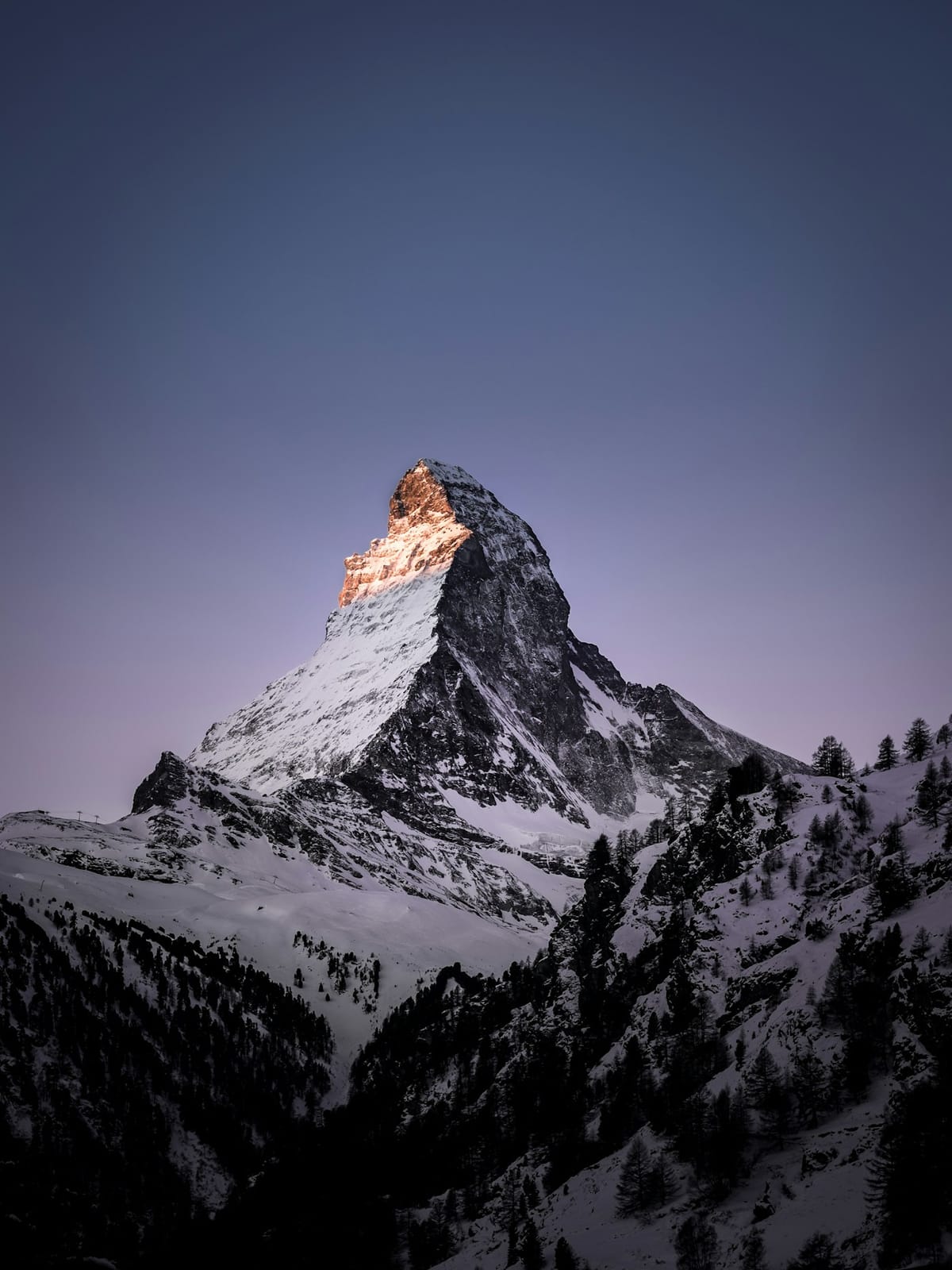
The move to Zermatt is the longest rail day of the week, about 3.5 hours with changes at Spiez and Visp. Cars stop at Täsch, and the last 12 minutes are by shuttle train. Zermatt has been car-free since 1930, with electric taxis and small buses in the streets. The Matterhorn is visible from the village, and the Matterhorn Museum covers the 1865 first ascent, which ended with four climbers dead on the descent.
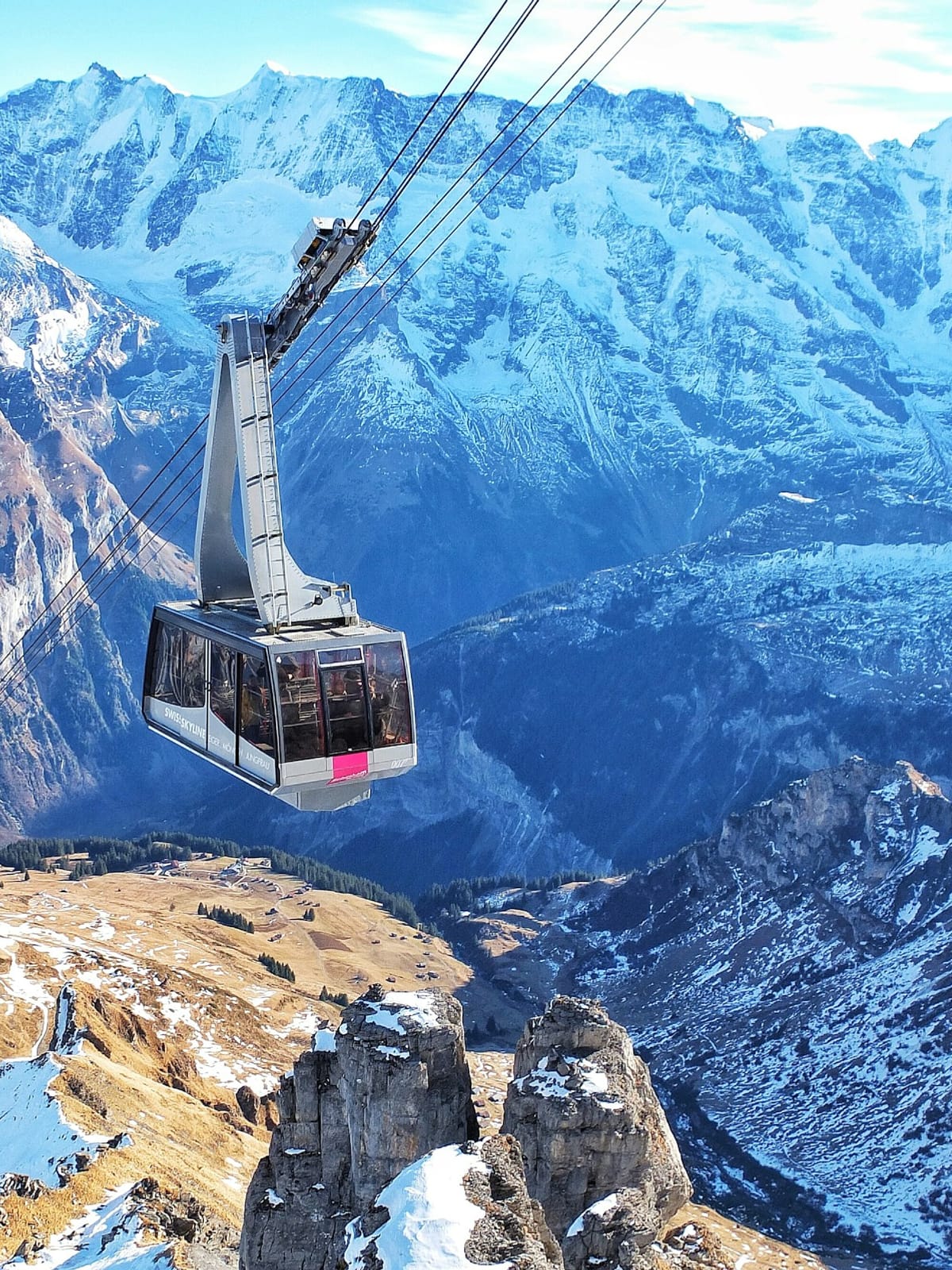
On day six take the Gornergrat railway, which has run since 1898 and climbs to 3,089 metres. From the top you can see the Matterhorn, the Gorner Glacier and the Monte Rosa range, whose highest point, the Dufourspitze, is 4,634 metres. The Matterhorn Glacier Paradise cable car, to 3,883 metres, is the other option, with a shorter ride but a colder summit. One high excursion per day is plenty.
Geneva: the last day
On day seven a train takes you from Zermatt to Geneva in about 4 hours, with a change at Visp and a ride along Lake Geneva. You arrive with the afternoon free. Geneva is French-speaking and international, home of the Red Cross since 1863. The Jet d'Eau fountain throws water about 140 metres above the lake, and the Old Town on the hill has the Reformation Wall and the cathedral of St Pierre. Watch lovers can add the Patek Philippe Museum.
Geneva Airport is only about 10 minutes from the station. If your flight leaves in the morning, add a night in Geneva and move the Zermatt transfer to the day before.
Where to stay
Zurich: the Altstadt or the lakefront, so you can walk everywhere. Lucerne: the old town or lakeside, ideally with a Pilatus view. Jungfrau region: Grindelwald if you drive, Wengen if you prefer a car-free village with Eiger views. Zermatt: the village centre, within a few minutes of the Matterhorn Express and Gornergrat stations. Luggage goes from the Zermatt station to the hotel by electric vehicle.
When to go
Late June to September is the most reliable season for both high excursions, with the mountain railways fully open and long days. July and August are the busiest and most expensive. Late May and early October can be clear and quiet, but check that cable cars and hotels are open, as some close between seasons. In winter, the Jungfraujoch and Gornergrat both run, and Zermatt is a ski resort. The route works, but plan on shorter days and book mountain tickets for the morning.
Ways to change the route
Short on time: drop Lucerne and spend three nights in the Jungfrau region and Zermatt. This keeps the two mountain days and removes a night of travel. With 8 or 9 days, add a night in Zermatt or in the Lauterbrunnen valley before adding a new place. With 10 or more, add the Glacier Express from Zermatt to St. Moritz, an 8-hour scenic train, or the Ticino region around Lugano. If you do not like heights, replace the Jungfraujoch with a day in Interlaken and a boat on Lake Thun or Lake Brienz.
How we plan it
We book the trains, mountain tickets and luggage transfers so you do not manage them on the day. We also watch the weather and move the Jungfraujoch or Gornergrat to the clearest morning. One person on our team is your contact from the first email until you land back home.
Frequently asked questions
Is 7 days enough for Switzerland?
Seven days is enough for Zurich, Lucerne, the Jungfrau region and Zermatt, with Geneva at the end. It is not enough to add Ticino, the Engadine or the Glacier Express without cutting a stop.
Do I need a car in Switzerland?
No. Trains cover almost the whole route, and Zermatt and Wengen are car-free. A private driver is useful for the Lucerne to Grindelwald leg and for luggage.
How do I get from the Jungfrau region to Zermatt?
By train, in about 3.5 hours. The usual route is via Interlaken, Spiez and Visp, then the Matterhorn Gotthard Bahn to Zermatt.
Is the Jungfraujoch worth the cost?
On a clear day, yes. The railway, the Aletsch Glacier and the Sphinx observatory are the high point of the Oberland. On a day of low cloud, the Gornergrat or a lower viewpoint is a better use of money.
What is the best month for a 7 day Switzerland itinerary?
June to September gives the best chance of clear skies and open mountain railways. September is quieter and often very clear.
 Quick cookie chat